

Are you tired of dealing with project delays and miscommunication on your construction site? You’re not alone. Many project managers and contractors struggle to keep their projects on track, especially when multiple stakeholders are involved. A well-planned schedule is essential to ensuring that your project is completed on time and within budget.
A 3-week look-ahead schedule provides a way to plan work in advance and keep all stakeholders informed of upcoming tasks. By using this type of scheduling, you can ensure that your project stays on track and that all team members are working together seamlessly. If your home or project is causing you trouble, don’t hesitate to reach out to experts who can help. You can call us at (727)-625-1374 or email contact@mail.wsvgroup.com for assistance.
Key Takeaways
- A 3-week look-ahead schedule helps to plan and coordinate tasks in advance.
- It ensures that all stakeholders are informed of upcoming tasks and deadlines.
- This type of scheduling is especially useful for projects with multiple contractors.
- It helps to identify potential delays and allocate resources effectively.
- A well-planned schedule is essential to ensuring project success.
What is Construction Scheduling Look Ahead?
A construction scheduling look-ahead is a forward-thinking approach. It helps project teams prepare for upcoming tasks. This strategy is key in construction project management, keeping projects on track and on time.
Definition and Purpose
A look-ahead schedule gives an overview of upcoming tasks in a construction project. It lets the lead contractor and trade partners plan ahead. This way, teams can coordinate better, use resources wisely, and avoid delays.
The look-ahead schedule acts as a roadmap for the project team. It outlines tasks for a specific period, usually 3 weeks. This helps teams focus, prioritize, and adjust as needed.
Importance in Project Management
In construction project management, the look-ahead schedule is crucial. It enhances trade coordination and keeps projects on schedule. It provides a clear view of upcoming tasks, improving communication among team members and stakeholders.
Good look-ahead scheduling helps project managers spot potential problems early. This proactive approach reduces delays and cost overruns. It leads to successful project outcomes.
Benefits of a 3-Week Look-Ahead Schedule
Using a 3-week look-ahead schedule can make your project more efficient. It helps construction teams plan better and avoid delays. This way, they can use their resources wisely.
Improved Resource Allocation
A 3-week schedule helps project managers use resources well. They can work with subcontractors and manage material and equipment lead times. This ensures the right tools are ready when needed, boosting productivity.
Effective resource allocation means spotting and fixing problems early. This keeps your project running smoothly without hiccups.
Enhanced Team Communication
Good team communication is key with a 3-week schedule. Sharing the schedule with everyone keeps everyone informed. This makes trade coordination easier and avoids misunderstandings that cause delays.
Keeping the schedule up to date lets team members share concerns. This teamwork approach makes the project team more united and ready to solve problems together.
Key Components of an Effective Look-Ahead Schedule
To keep your construction project on schedule, a solid look-ahead schedule is essential. It outlines the tasks, time frames, and key milestones needed for success.
Activities to Include
Your look-ahead schedule should list all important tasks. This includes site prep, foundation work, and setting up electrical and plumbing systems. It’s also important to focus on the critical path. This path shows the activities that determine the project’s minimum duration.
Daily reports are crucial for tracking progress and spotting delays. By using daily reports, you can keep your project on track and make any necessary changes.
Timeframes and Milestones
Setting clear time frames and milestones is key to tracking your project’s progress. Each activity should have a milestone to help monitor and adjust as needed.
Here’s how you can organize your look-ahead schedule:
| Activity | Start Date | End Date | Milestone |
|---|---|---|---|
| Site Preparation | Week 1 | Week 2 | Completion of Site Clearance |
| Foundation Work | Week 3 | Week 5 | Completion of Foundation |
| Installation of Electrical Systems | Week 6 | Week 8 | Completion of Electrical Installation |
By focusing on these key elements, your construction project will be well-planned, executed efficiently, and completed on time.
How to Create a 3-Week Look-Ahead Schedule
A 3-week look-ahead schedule is like a roadmap for project success. It helps teams work together better and use resources wisely. This method lets you see what’s coming, spot any problems, and make smart choices to stay on track.
Step-by-Step Approach
To make a good 3-week look-ahead schedule, just follow these steps:
- First, list the tasks you need to do in the next three weeks.
- Then, decide who, what, and when you’ll need for each task.
- Next, set realistic times for each task, thinking about what needs to happen first.
- Make sure everyone involved knows the plan by talking to trade partners and stakeholders.
- Finally, keep checking and updating the schedule as things change and progress.

Tools and Software Options
There are many tools and software to help with your 3-week look-ahead schedule. Here are some popular ones:
| Tool/Software | Description | Benefits |
|---|---|---|
| Gantt Charts | Visual representation of tasks and timelines | Easy to understand, helps in identifying dependencies |
| Project Management Software | Comprehensive platform for scheduling, resource allocation, and progress tracking | Enhances collaboration, provides real-time updates |
| Scheduling Apps | Mobile applications for scheduling and task management | Accessible on-the-go, facilitates quick updates |
Using these tools and following a clear plan, you can make a strong 3-week look-ahead schedule. This improves trade coordination and lead times. It helps you plan ahead, solve problems early, and ensure your project succeeds.
Common Challenges in Scheduling
Scheduling is a key part of managing construction projects. It’s important to know the challenges to overcome them. Construction projects are complex, with many tasks, resources, and stakeholders involved.
Identifying Potential Delays
One big challenge is spotting potential delays. Delays can come from weather, resource availability, and site conditions. To tackle these, project managers use critical path analysis to find key tasks that affect the timeline.
Daily reports are also crucial. They help track progress and spot issues quickly. This way, project managers can act fast to reduce delays’ impact on the schedule.
How to Mitigate Risks
To manage risks in scheduling, you need to plan, monitor, and adapt. Here are some tips:
- Make a detailed project schedule with all tasks and their connections.
- Keep the schedule updated with changes and progress.
- Use critical path analysis to focus on key tasks.
- Have a daily reporting system to track progress and spot issues early.
Understanding the impact of delays on the timeline and budget is also key. The table below shows how different delays can affect a project:
| Delay Factor | Impact on Timeline | Impact on Budget |
|---|---|---|
| Weather Conditions | High | Moderate |
| Resource Availability | Moderate | High |
| Unforeseen Site Conditions | High | High |
By knowing the common scheduling challenges and how to manage them, project managers can lead successful projects.
Role of Stakeholders in the Look-Ahead Process
Understanding the role of stakeholders is key when planning projects. Stakeholders, like project teams and contractors, play a big part in making a look-ahead plan work.
Engaging Project Teams
Getting project teams involved is vital in the look-ahead process. By including them in planning, you make sure everyone knows their part. This teamwork avoids confusion and keeps the project moving smoothly.
To get project teams on board, try these steps:
- Clearly communicate project goals and objectives
- Define roles and responsibilities
- Establish open channels for feedback and concerns
Collaborating with Contractors
Working with contractors is also crucial. They bring important skills and resources to the table. Their help is key to hitting project deadlines.
To work well with contractors, focus on:
- Clearly defining scopes of work and expectations
- Establishing realistic timelines and deadlines
- Regularly monitoring progress and addressing potential issues
By working with project teams and contractors, you can make a strong look-ahead plan. Good trade coordination and lead time management are key. They help you finish projects on time and under budget.
Best Practices for Maintaining Your Schedule
To keep your construction project on track, it’s key to have a well-organized schedule. This means following a few important steps. These steps help ensure your project is finished on time and is a success.
Regular Updates and Revisions
Keeping your schedule up to date is vital. You need to add daily reports and feedback from your team. This helps show the project’s real status.
By doing this, you can spot delays early. Then, you can make changes to stay on schedule.
Also, update your schedule when the project scope changes or when unexpected things happen. Being flexible keeps your schedule useful throughout the project.
Tracking Progress and Performance
Tracking how your project is doing is crucial. You should watch how it’s doing against the critical path. This helps you see where you’re falling behind.
Then, you can find ways to get back on track. This tracking also lets you see how your team and contractors are doing. It gives you insights for planning better projects in the future.
By following these best practices, your schedule will be a valuable guide. It will help your construction project succeed.
Adjusting the Schedule During Execution
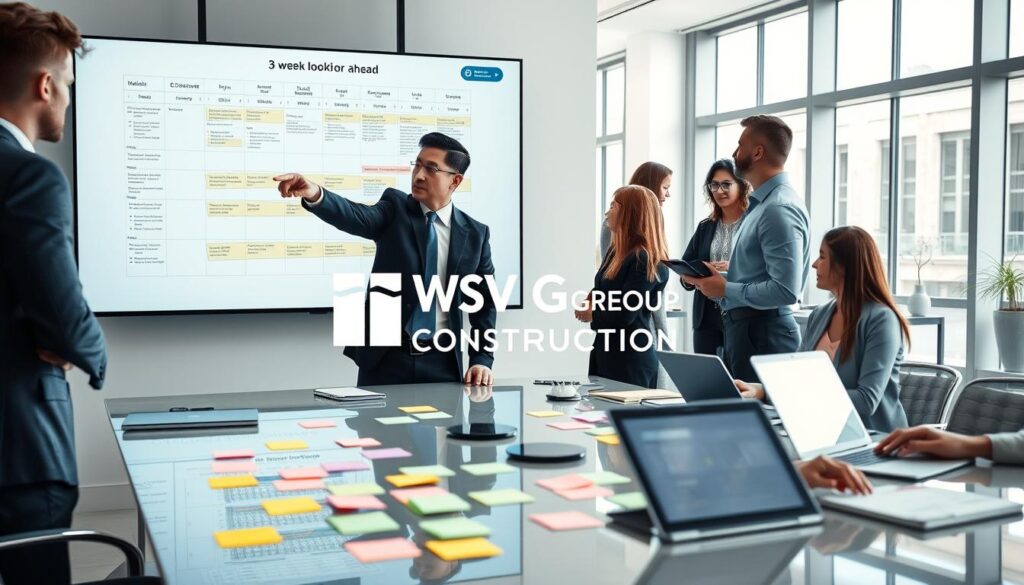
To keep your construction project on schedule, you must be ready to make changes as things change. Construction projects are always changing due to weather, site conditions, and material lead times. A look-ahead plan is key for handling these changes.
Adapting to Unforeseen Changes
Unexpected changes can come from many places, like site conditions, new rules, or material delays. Good trade coordination is important for managing these changes. It makes sure everyone knows about the changes and their part in making them work.
When unexpected changes happen, project managers need to look at the project schedule again. They must update the look-ahead plan to show new timelines, who will do what, and important milestones. This helps reduce the effect of disruptions and keeps the project moving forward.
Communicating Adjustments to the Team
It’s important to talk clearly when making schedule changes. Everyone involved, like contractors and project teams, needs to know about changes and what they mean. Good communication makes sure everyone is on the same page and knows what they need to do.
“The key to successful project management is the ability to adapt to change while maintaining clear communication with all stakeholders.”
To help with this, consider these strategies:
- Keep the project schedule up to date and share it with everyone who needs to know.
- Have meetings to talk about changes and answer any questions or concerns.
- Use project management software to track changes and have one place for the project schedule.
By being ready for unexpected changes and talking clearly, you can keep your construction project on track. This forward-thinking approach to managing the schedule is key for finishing projects on time and within budget.
Real-World Examples of Look-Ahead Scheduling
Looking at real-world examples of look-ahead scheduling can really help. It shows how to make your project’s scheduling better. This method has worked well in many construction projects, making them more successful.
Case Studies and Success Stories
Many case studies show the good things about look-ahead scheduling. For example, a big construction project used a 3-week look-ahead schedule. This led to a 20% reduction in project delays.
This success came from keeping a close eye on the critical path and making schedule changes when needed.
- Improved resource allocation through detailed daily reports
- Enhanced team communication and collaboration
- Better risk management through proactive scheduling
Lessons Learned from Industry Leaders
Industry leaders have shared important lessons on using look-ahead scheduling. One big point is the need to often check and update the schedule. This keeps it current with project changes.
Also, using technology, like scheduling software, makes daily reports more accurate. This boosts scheduling efficiency.
- Regularly review and update the look-ahead schedule
- Utilize scheduling software for improved accuracy
- Foster a culture of collaboration among project teams
By learning from these examples and using these lessons in your projects, you can make your scheduling better. This ensures your projects are done on time and within budget.
Your Home Causing You Trouble?
If you’re having trouble with your construction project, it’s important to fix it fast. A 3-Week Look-Ahead Schedule can keep you on track. But sometimes, you need expert help to manage complex issues.
Expert Assistance at Your Service
Our team at WSV Group is ready to help. We have the skills to manage your construction project. We’ll help you get past any problems and make sure your project succeeds.
Get in Touch
Call us at (727)-625-1374 or email at contact@mail.wsvgroup.com for help. Don’t let construction problems ruin your plans. Let us find a way to solve them for you.
FAQ
What is a 3-week look-ahead schedule, and how does it help in construction project management?
A 3-week look-ahead schedule is a key tool in managing construction projects. It helps project managers plan tasks, allocate resources, and spot delays. This way, construction teams can finish projects on time and within budget.
What are the benefits of using a 3-week look-ahead schedule in construction projects?
Using a 3-week look-ahead schedule has many benefits. It improves how resources are used, boosts team communication, and lowers the risk of delays. This ensures projects are done on time and within budget.
What are the key components of an effective look-ahead schedule?
An effective look-ahead schedule includes all needed activities. This includes site prep, foundation work, and installing electrical and plumbing systems. It also outlines timeframes and milestones for each activity. This helps project managers track progress and spot potential delays.
How do you create a 3-week look-ahead schedule?
To create a 3-week look-ahead schedule, start by identifying tasks and allocating resources. Then, set timelines for each task. You can use tools like Gantt charts and project management software to manage your schedule.
How can you mitigate risks and delays in construction projects?
To reduce risks and delays, identify potential issues and plan how to handle them. Tools like critical path analysis and daily reports can help spot delays and plan solutions.
What is the role of stakeholders in the look-ahead process?
Stakeholders are crucial in the look-ahead process. Engage with project teams and contractors to ensure they know the project schedule and their roles.
How often should you update and revise your look-ahead schedule?
Update and revise your look-ahead schedule regularly. This reflects changes in the project scope or schedule. It helps track progress, identify areas for improvement, and plan strategies to address them.
How do you adapt your schedule to unforeseen changes during project execution?
Be ready to adjust your schedule for unexpected changes, like weather or site conditions. Communicate these changes to the project team.
Can you provide examples of successful look-ahead scheduling in construction projects?
There are many examples of successful look-ahead scheduling in construction. Learning from these can help improve your scheduling practices.
What should you do if you’re experiencing issues with your construction project?
If you’re facing issues with your project, seek help from a professional team. Contact them at (727)-625-1374 or email contact@mail.wsvgroup.com for assistance with trade coordination, lead times, and project management.