Imagine a construction site where everyone knows the dangers and how to avoid them. This is real when you use a detailed jobsite safety checklist. It makes sure you follow OSHA basics and lowers the chance of accidents and injuries.
A good safety plan is key to avoiding big problems and keeping your team safe. It covers personal protective equipment (PPE), fall protection, and more. For help making a safety plan that fits your site, call us at (727)-625-1374 or email contact@mail.wsvgroup.com.
Key Takeaways
- A detailed safety checklist is key to avoiding accidents on construction sites.
- Following OSHA rules helps avoid expensive fines.
- Rules for PPE, fall protection, and warning others about dangers are important.
- Cleaning up regularly keeps the work area safe.
- Custom safety plans can be made to fit your site’s needs.
Understanding the Importance of a Jobsite Safety Checklist
To keep a jobsite safe and efficient, a detailed safety checklist is key. It helps spot hazards and reduce risks. This is crucial for a safe working environment.
What is a Jobsite Safety Checklist?
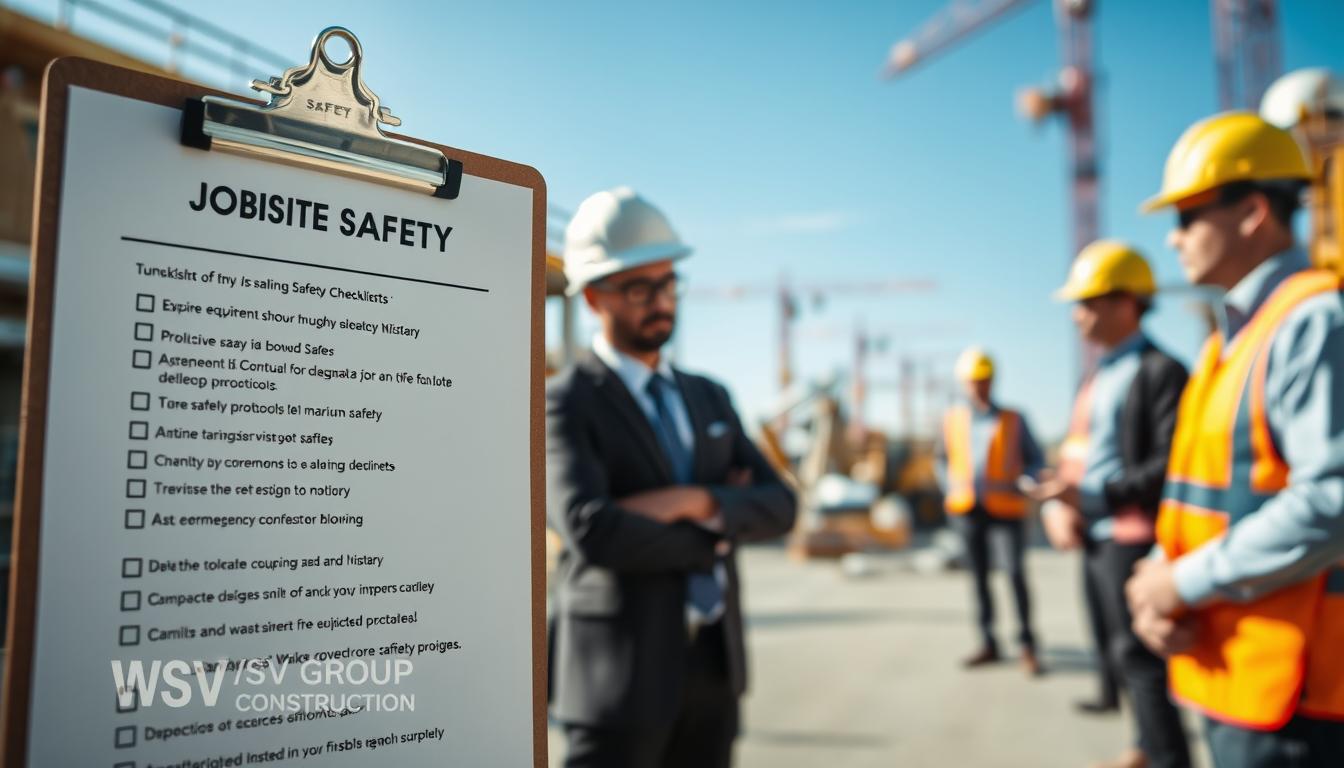
A jobsite safety checklist outlines the safety steps needed for a specific site. It covers PPE inspection, fall protection, and emergency plans. It makes sure workers know the risks and how to avoid them.
Why Every Jobsite Needs One
Each jobsite has its own dangers. A safety checklist is made for your site’s needs. Regular daily huddles keep everyone informed about safety. This makes the site safer and more efficient.
Benefits of Following a Safety Checklist
Using a safety checklist has many advantages. It boosts safety, lowers accident risk, and meets safety rules. Here are some main benefits:
| Benefit | Description |
|---|---|
| Improved Safety | Regular checks find and fix hazards. |
| Reduced Risk | A checklist ensures all safety steps are followed. |
| Enhanced Compliance | It helps meet safety standards and rules. |
Key Components of an Effective Jobsite Safety Checklist
To keep the workplace safe, it’s key to have a detailed jobsite safety checklist. A good checklist covers all safety aspects of the job site.
Personal Protective Equipment (PPE)
PPE is crucial for safety at work. Regular checks of PPE ensure it’s working right. This includes hard hats, gloves, safety glasses, and respirators. Look for damage and replace as needed.
Tip: Teach your team the importance of PPE and how to check it.
Site Hazards Assessment
Doing a full site hazards assessment is important. It helps spot dangers like falls, electrical issues, and hazardous materials. This involves:
- Spotting fall hazards and making sure guardrails are in place
- Finding electrical dangers, like exposed wiring and overloaded circuits
- Keeping hazardous materials safe, with proper labels and storage
Emergency Preparedness Plan
An emergency plan outlines what to do in emergencies, like fires or natural disasters. Your plan should cover:
- How to evacuate and emergency exit routes
- First aid kits and who’s trained to use them
- How to alert team members and emergency services
Drills and training help your team know how to act in emergencies.
OSHA says, “Employers must create a safety and health program. This includes hazard assessment, control, and training” (OSHA Guidelines). A detailed jobsite safety checklist is a big part of this.
| Component | Description | Benefits |
|---|---|---|
| PPE Inspection | Regular checks of personal protective equipment | Ensures equipment is in good condition, reducing injury risk |
| Site Hazards Assessment | Identifying potential hazards on the jobsite | Allows for implementation of controls to mitigate risks |
| Emergency Preparedness | Planning for emergency situations | Ensures a swift and effective response to emergencies |
Steps to Create Your Jobsite Safety Checklist
To avoid accidents and follow OSHA rules, making a detailed jobsite safety checklist is key. This process includes several important steps. These steps help make sure everyone on the jobsite is safe.
Identify Common Hazards
The first step is to find out what hazards are common. These can be falls, electrical dangers, and harmful materials. Doing a good site hazards assessment helps you see where you need to focus. For example, keeping the area clean can greatly lower the chance of slips and falls.
Involve Your Team in the Process
It’s very important to get your team involved in making the safety checklist. Asking for their ideas and feedback makes sure everyone knows the safety rules. This not only helps follow the rules but also builds a safety-first culture on the jobsite. Ask your team to tell you about any dangers they see and how to fix them.
Review and Revise Regularly
A jobsite safety checklist should always be updated. As your project goes on, new dangers might show up, and old safety steps might need to change. Regular checks keep your checklist up-to-date and effective. This shows you’re serious about keeping the work area safe, which can make your team happier and more productive.
By following these steps and keeping a detailed jobsite safety checklist, you can greatly cut down on accidents. This also makes sure you’re following OSHA basics. Being proactive about safety not only keeps your team safe but also helps your project succeed.
Conducting a Safety Audit on Your Jobsite
To keep your work area safe and healthy, it’s key to do regular safety checks. A safety audit looks closely at your workplace to spot dangers and make sure you follow safety rules.

When to Perform a Safety Audit
It’s important to do safety audits often, like every week or month. You should also check after big changes or if there’s an accident.
Daily huddles are great for quick safety checks. They help keep your team focused on safety.
How to Document Findings
Writing down what you find in a safety audit is very important. It helps you see how you’re doing and what needs work. Make sure to note any dangers, what you did to fix them, and any ideas for getting better.
Using a set form or checklist makes it easier. It helps you remember to write down everything important. Pictures or videos can also be useful as proof.
Communicating Results to Your Team
After you’ve done the safety audit and written down what you found, tell your team. You can share this during a daily huddle or a special safety meeting.
Make sure everyone knows what you found and what to do about it. This means teaching them about new safety rules and making sure they have the right PPE.
Getting your team involved in safety checks and keeping them in the loop helps build a safe and responsible work culture.
Training Your Team on Safety Protocols
Teaching your team about safety is key to avoiding accidents at work. A good training program helps follow OSHA rules and builds a safety-first culture.
Types of Safety Training
There are many ways to teach your team about safety. These include:
- Classroom instruction, where workers learn about safety procedures and protocols in a traditional classroom setting.
- Hands-on training, which provides workers with practical experience in using safety equipment and following safety protocols.
- Online courses, offering flexibility and accessibility for workers to learn about safety protocols at their own pace.
Each training method has its own strengths. Mixing them can cover all safety bases.
Importance of Ongoing Education
Keeping up with safety education is essential. Safety rules and new hazards can pop up anytime. Regular updates keep workers informed.
Some key ongoing education points are:
- Regular refresher courses to reinforce previous training.
- Updates on new safety protocols and equipment.
- Training on new hazards or risks identified on the jobsite.
Encouraging Team Participation
Getting your team involved is crucial for safety training success. You can do this by:
- Involving workers in the development of safety protocols.
- Encouraging feedback on safety procedures.
- Recognizing and rewarding safe behavior.
Safety training is an ongoing effort. By investing in your team’s safety knowledge and encouraging their participation, you can greatly lower accident risks.
| Training Method | Description | Benefits |
|---|---|---|
| Classroom Instruction | Traditional teaching method in a classroom setting. | Allows for interactive learning and immediate feedback. |
| Hands-on Training | Practical experience with safety equipment and protocols. | Enhances understanding and application of safety protocols. |
| Online Courses | Flexible, self-paced learning. | Accessible from anywhere, reduces training time away from the jobsite. |
Common Jobsite Hazards to Address
It’s crucial to spot and tackle common jobsite dangers to avoid accidents. A safety-first mindset not only keeps workers safe but also boosts work efficiency.
Your site likely has many hazards that need attention. Keeping the area clean is key to safety. A tidy site reduces slip, trip, and fall risks.
Slips, Trips, and Falls
Slips, trips, and falls are big job site dangers. They happen on wet floors, uneven ground, or messy paths. Cleaning regularly and keeping paths clear can stop these accidents. Also, warning signs for wet floors help a lot.
Best Practices to Prevent Slips, Trips, and Falls:
- Maintain clean and dry floors
- Ensure walkways are clear of clutter and obstructions
- Use warning signs for wet floors or other hazards
- Implement a regular housekeeping schedule
Electrical Safety Risks
Electrical dangers are a big worry on job sites. Bad wiring, too much power, and wrong use of tools can cause shock or fires. Keeping electrical gear in check and training on safety is essential.
Key Electrical Safety Measures:
- Regularly inspect electrical equipment
- Train workers on electrical safety protocols
- Avoid overloading circuits
- Use proper lockout/tagout procedures for maintenance
Hazardous Materials Handling
Jobs often involve working with dangerous materials. It’s vital to handle, store, and throw away these materials safely. Workers need to know how to handle them right, and they should wear the right gear.
Safe Handling of Hazardous Materials:
- Train workers on handling hazardous materials
- Use appropriate PPE for handling hazardous materials
- Ensure proper storage and disposal of hazardous materials
- Follow OSHA guidelines for hazardous materials handling
By tackling these common dangers and setting up strong safety rules, you can make your site safer and more productive. Training, keeping equipment in good shape, and a safety-first culture are key to success.
Encouraging a Safety-First Culture
A successful jobsite starts with making safety everyone’s main focus. This not only keeps workers safe but also boosts productivity and lowers risks.
Safety experts say, “A culture of safety is not just about following rules; it’s about making sure everyone looks out for each other.” This approach is key to avoiding accidents and keeping things running smoothly.
Leading by Example
Leaders and supervisors are key in promoting a safety-first culture. By always wearing PPE and following safety rules, they show that safety is essential.
Starting the day with a daily huddle helps spread safety messages. It also lets teams talk about any issues from the day before.
Rewarding Safe Behavior
It’s important to praise safe actions. This encourages workers to stick to safety rules and builds a safety-focused culture.
- Set up a reward system for those who always follow safety guidelines.
- Publicly thank teams or individuals who help keep the work area safe.
A safety leader once said,
“Praising safe behavior is not just about rewarding people; it’s about showing that safety is valued.”
Open Communication Channels
Keeping communication open is crucial for a safety-first culture. Workers should feel free to report any dangers or incidents without fear.
Regular safety meetings and an open-door policy help create this environment. It’s also important to listen to feedback and show that safety concerns are taken seriously.
By using these methods, you can build a strong safety-first culture that benefits everyone on the jobsite.
Legal Requirements for Jobsite Safety
Employers must keep their jobsites safe for workers. They need to know and follow many legal rules and regulations.
OSHA Standards Every Employer Should Know
The Occupational Safety and Health Administration (OSHA) has rules for a safe workplace. Important rules cover hazard communication and ladder safety.
- Hazard Communication Standard (HCS) requires employers to inform workers about chemical hazards.
- Ladder Safety Standards mandate proper use, inspection, and maintenance of ladders.
| OSHA Standard | Description | Compliance Requirement |
|---|---|---|
| Hazard Communication | Informing workers about chemical hazards | Training, labeling, and Safety Data Sheets (SDS) |
| Ladder Safety | Proper use and maintenance of ladders | Regular inspection, proper training, and safe usage practices |
Liability and Worker Protection
Employers are responsible for a safe work environment. They must protect workers and provide the right training and tools. Worker protection is a legal and moral duty.
Keeping Up with Changing Regulations
OSHA rules and standards change over time. Employers must keep up with these changes to stay compliant. It’s important to regularly check and update safety plans and training.
Troubleshooting Jobsite Safety Issues
Keeping a safe work area is a big job. It needs constant effort and careful attention. By spotting and fixing common safety problems, you can lower the chance of accidents and injuries.
Common Issues and Solutions
Keeping your work area clean is a simple but powerful safety step. A tidy site reduces the risk of falls and slips. Also, making sure everyone knows OSHA basics helps avoid electrical and chemical mishaps.
Seeking Assistance
If safety problems keep happening, get help. Talking to a safety expert or a trusted group can offer the support you need. For example, call (727)-625-1374 or email contact@mail.wsvgroup.com for professional advice.