Are you ready for the next big storm? Hurricanes can be devastating, causing a lot of damage and displacement. But, you can protect your home and family before it hits.
Preparing for a hurricane might seem hard, but it’s very important. By taking the right steps, you can lower the risk of damage. This ensures your family’s safety and well-being.
With more frequent and intense storms, being storm-ready is key. In this article, we’ll talk about how to prepare your home for hurricanes. We’ll also give you practical tips to get started.
Key Takeaways
- Understand the risks associated with hurricanes and the importance of preparation.
- Learn how to protect your home from hurricane damage.
- Discover the essential steps to ensure your family’s safety during a hurricane.
- Find out how to create a storm preparedness plan.
- Get tips on how to recover after a hurricane.
Understanding Hurricane Risks to Your Home
Hurricanes can damage homes a lot. It’s key to know and fix these risks. This is the first step in hurricane preparedness and keeping your home safe.
Common Structural Vulnerabilities
Homes in areas prone to hurricanes face certain dangers. These dangers include weak spots in the home’s design and risks from age.
Identifying Weak Points in Your Home’s Design
Look for weak spots in your home like poorly reinforced roofs, weak doors, and vulnerable windows. These are common spots where hurricanes can cause damage.
Age-Related Risk Factors
Older homes might have materials and building methods that aren’t safe for hurricanes. This makes them more at risk.
Regional Hurricane Risk Assessment
The danger from hurricanes changes by area. Knowing the risks in your area is key for good disaster response planning.
The Cost of Inadequate Preparation
Not preparing your home for hurricanes can cost a lot. Spending on construction safety can help avoid these costs.
Evaluating Your Home’s Current Hurricane Readiness
Checking if your home is ready for hurricanes is very important. As hurricane season comes, knowing what your home can’t handle is crucial. This helps you take the right steps to keep it safe.
Professional Home Inspection Checklist
A pro can spot weak spots in your home’s structure. They look for roof damage, weak doors, and windows that can’t handle strong winds. It’s like making sure a construction site is safe by finding hazards early.
| Inspection Area | Potential Issues |
|---|---|
| Roof | Missing shingles, damaged tiles |
| Windows & Doors | Non-impact resistant glass, weak frames |
DIY Vulnerability Assessment
If you like to do things yourself, a DIY check is a good start. It means looking over your home’s outside and inside for weak spots.
Exterior Inspection Points
- Check for loose or missing roof shingles
- Inspect windows and doors for damage or weak points
- Ensure outdoor furniture and decorations are secure
Interior Warning Signs
- Look for water leaks or stains on ceilings and walls
- Check for signs of structural damage, such as cracks in walls
Documenting Your Home’s Condition
It doesn’t matter if you get a pro or do it yourself, documenting your home is key. Take pictures and videos of the outside and inside. Also, keep records of any checks or fixes. This info is super helpful when dealing with insurance after a hurricane.
By doing these things, you make your home more ready for strong winds. This boosts your hurricane safety measures a lot.
Essential Construction, Hurricane, Safety, and Disasters Preparedness
A well-prepared home is key to weathering hurricanes. This starts with understanding essential construction and safety standards. As we prepare for hurricane season, it’s crucial to assess and potentially upgrade our homes to withstand these powerful storms.
Building Code Compliance for Hurricane Zones
Ensuring your home complies with local building codes is the first step in hurricane preparedness. These codes are designed to ensure structures can withstand high winds and flying debris. We will outline the critical aspects of building code compliance specific to hurricane zones.
Critical Structural Reinforcement Points
Reinforcing your home’s structure is vital for withstanding hurricane-force winds. Key areas include the roof, walls, and foundation. Let’s examine the most critical reinforcement points.
Selecting Hurricane-Resistant Building Materials
Choosing the right materials can significantly enhance your home’s resilience to hurricanes. We’ll explore the options available and their benefits.
Impact-Resistant Options
Impact-resistant materials, such as certain types of windows and roofing, are designed to withstand debris. These materials can be a significant investment but offer substantial protection.
Cost vs. Protection Analysis
When selecting hurricane-resistant materials, it’s essential to balance cost with the level of protection offered. Here’s a comparison of some common materials:
| Material | Cost | Protection Level |
|---|---|---|
| Standard Roofing | $5-$10 per sq. ft. | Low |
| Impact-Resistant Roofing | $10-$20 per sq. ft. | High |
| Standard Windows | $100-$300 per window | Low |
| Impact-Resistant Windows | $500-$1000 per window | High |
As shown in the table, while impact-resistant materials are more expensive, they offer significantly higher protection levels against hurricanes.
By understanding and implementing these construction and safety measures, homeowners can significantly reduce the risk of damage from hurricanes. It’s a crucial step in disaster recovery planning and ensuring the safety of residents.
Protecting Windows and Doors from Storm Damage
When a hurricane is coming, securing your home’s windows and doors is key. This step helps keep your property safe from wind-borne debris. It also stops water from getting in, which can cause a lot of damage.
Hurricane Impact Windows vs. Standard Options
Hurricane impact windows are made to handle high winds and debris. They have laminated glass that doesn’t break easily. Getting hurricane impact windows makes your home stronger against storms.
Storm Shutters and Panels
Storm shutters and panels add extra protection for your windows and doors. They can be made from metal or plywood.
Permanent vs. Temporary Solutions
Permanent storm shutters are always ready to go, making them a convenient choice. But, they cost more. Temporary solutions like plywood panels are cheaper but need to be put up before each storm.
DIY Installation Guidelines
If you’re doing it yourself, follow the instructions and local codes carefully. A good fit and secure installation are crucial for their effectiveness.
| Material | Durability | Cost |
|---|---|---|
| Metal | High | Moderate to High |
| Plywood | Moderate | Low to Moderate |
Reinforcing Garage Doors and Entry Points
Garage doors and entry points can also get damaged in storms. Using impact-resistant materials and securing them well can protect your home’s inside.
By doing these things, homeowners can make their homes stronger against hurricane winds and debris. This makes living there safer.
Roof Preparation and Reinforcement Techniques
Roof preparation is key in disaster response and construction site safety. A good roof protects your home from the weather, especially during hurricane season.
Roof Inspection and Repair Priorities
Before a hurricane, check your roof for weak spots. Look for missing, loose, or damaged shingles. Make sure all roofing materials are tight.
Fix the roof based on how bad the damage is and how likely it is to get worse.
- Check for curled or buckled shingles
- Inspect flashing around chimneys, vents, and skylights
- Verify that roof-to-wall connections are secure
Secondary Water Barriers and Underlayment
A secondary water barrier, like a waterproof underlayment, adds extra protection. Think about using a self-adhering, rubberized asphalt underlayment in weak spots.
Key considerations for secondary water barriers include:
- Material durability and water resistance
- Compatibility with existing roofing materials
- Proper installation techniques
Securing Roof Materials Against High Winds
Securing roof materials is crucial to stop damage from high winds. This means making shingles and tiles stronger and bracing gable ends.
Shingle and Tile Reinforcement
To make shingles and tiles stronger, use adhesive and mechanical fasteners. Apply adhesive to the underside of shingles or tiles. Then, secure them with ring-shank nails or other approved fasteners.
Gable End Bracing
Gable end bracing involves adding supports between the gable end and the roof. This helps prevent collapse. It’s especially important for homes with big gable ends or in windy areas.
By using these roof preparation and reinforcement methods, homeowners can lower the risk of damage during a hurricane.
Yard and Exterior Preparation for Hurricane Conditions
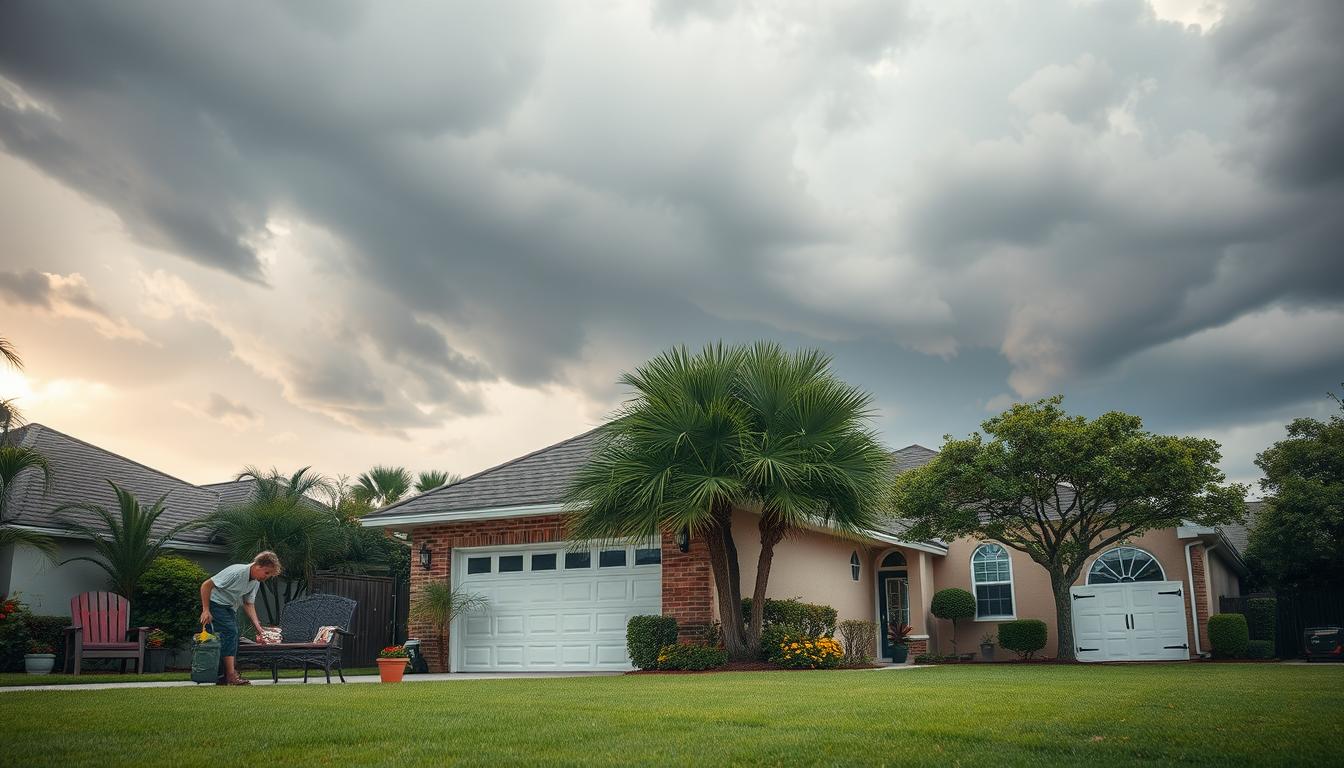
To make your home storm-ready, don’t forget about yard and exterior prep. A well-prepared yard can greatly lower the risk of damage to your home and property during a hurricane.
Tree Trimming and Landscape Management
Trimming trees is key to avoid branches that could harm your home or block escape paths. Trimming trees and shrubs cuts down the risk of injury from flying debris. It also makes it easier to keep your property in shape after the storm.
- Remove dead or dying trees and branches.
- Trim branches that are close to your home or power lines.
- Consider hiring a professional for large or complex tree trimming tasks.
Securing Outdoor Furniture and Decorations
Outdoor furniture and decorations can turn into projectiles in high winds, damaging your home and neighbors’ properties. Securing these items is a simple yet effective way to reduce this risk.
- Bring lightweight furniture inside or tie it down securely.
- Remove or secure decorations that could become airborne.
- Consider anchoring heavy outdoor items to the ground.
Drainage System Maintenance
A well-maintained drainage system is key to avoid water buildup around your home. This can cause foundation damage or flooding.
Gutter Cleaning and Repair
Clean gutters ensure water flows freely and doesn’t accumulate. This can prevent damage to your home’s foundation or walls.
- Clean gutters and downspouts regularly.
- Check for and repair any damage to gutters or downspouts.
Preventing Water Intrusion Points
Sealing any gaps or weaknesses around your home’s exterior can prevent water intrusion during heavy rainfall.
- Inspect your home’s exterior for gaps or cracks.
- Seal any openings around windows, doors, and other potential entry points.
Creating a Hurricane Emergency Supply Kit
It’s key to prepare a hurricane emergency supply kit. A good kit helps us face the storm and its aftermath. It keeps us safe and comfortable.
Essential Food, Water and Medical Supplies
Our kit should have non-perishable food and at least one gallon of water per person per day. We also need essential medical supplies like bandages and antiseptic wipes. Don’t forget any prescription medications.
Power Outage Preparation Tools
For power outages, we need flashlights, extra batteries, and a battery-powered radio. A portable charger for our devices is also important.
Communication and Documentation Necessities
We should include communication tools like a fully charged cell phone with a backup power source. Also, keep important documents like insurance policies and identification in a waterproof container.
Developing a Comprehensive Family Hurricane Plan
As hurricane season gets closer, making a family emergency plan is key. A good plan makes sure everyone knows what to do and where to go if a hurricane hits.
Evacuation Routes and Procedures
Finding safe ways to leave and what to do is very important. We need to map out several routes to safe places. This includes the closest shelter and other routes if the first one is blocked.
- Identify safe zones and shelters.
- Plan for multiple evacuation routes.
- Practice the evacuation plan with all family members.
Communication Protocols During Disasters
Having a plan for how to stay in touch is crucial during a hurricane. We should pick a meeting spot outside the house and a contact person who is not in the danger zone.
| Family Member | Contact Information | Meeting Point |
|---|---|---|
| John | 123-456-7890 | Local Shelter |
| Jane | 987-654-3210 | Local Shelter |
Special Considerations for Children, Elderly, and Pets
We must think about the needs of kids, the elderly, and pets when planning. This means having the right supplies and finding shelters that can help these groups.
By making a detailed family hurricane plan, we can keep everyone safe. This includes those who need extra care.
Insurance Considerations for Hurricane Disasters
As hurricane season gets closer, knowing your insurance is key to protect your home and money. We’ll look at important hurricane insurance topics, like what’s covered and flood insurance needs.
Understanding Hurricane Coverage Limitations
Most homeowners’ insurance doesn’t cover all hurricane damage, especially flooding. It’s important to check your policy to know what’s included and what’s not.
Flood Insurance Requirements
In areas hit by hurricanes, many homeowners need flood insurance. Talk to your insurance company to see if you need a flood policy.
Documenting Property for Claims
Before a hurricane, document your property well for insurance claims. Take photos and videos of your home and things inside.
Digital Inventory Methods
Having a digital list of your stuff can make insurance claims easier. Use apps or cloud storage to keep track of your valuables.
Important Document Protection
Keep important papers, like insurance and ID, in a safe place. Use a waterproof container or a safe deposit box.
| Document Type | Storage Recommendation | Digital Backup |
|---|---|---|
| Insurance Policies | Safe Deposit Box | Cloud Storage |
| Identification | Waterproof Container | Scanned Copies |
| Property Inventory | Digital Only | Cloud Storage |

Last-Minute Hurricane Safety Measures
Surviving a hurricane starts with good preparation in the last 48 hours. As the storm approaches, we must take key steps to stay safe and protect our homes.
48-Hour Preparation Checklist
Start by checking off a detailed list 48 hours before the storm. Stock up on emergency supplies like food, water, and batteries. Also, secure outdoor items that could fly away in strong winds.
24-Hour Critical Actions
In the last 24 hours, focus on urgent tasks. Charge your devices, fill up your car’s gas tank, and check your evacuation plans.
Evacuation vs. Sheltering in Place Decisions
Choosing to leave or stay depends on the storm’s path and your home’s readiness. Think about the storm surge, wind, and your home’s strength.
Post-Hurricane Home Assessment and Recovery
After a hurricane, checking your home’s condition is key for a safe recovery. We must be careful when assessing the damage to stay safe.
Safe Re-entry Procedures
Before going inside, look for structural damage like cracks in walls or foundations. Watch out for hazards like fallen power lines or sharp debris. Also, be careful of contaminated water and mold.
Documenting Damage for Insurance
To help with insurance claims, document the damage well. Take photos or videos of all damaged areas, including structural damage and lost personal items. Detailed documentation is crucial for getting compensation.
Emergency Repairs to Prevent Further Damage
Do emergency repairs to stop more damage. This includes covering broken windows or doors and fixing the roof.
Water Damage Mitigation
To reduce water damage, remove standing water and dry affected areas fast. Use fans and dehumidifiers to dry things quicker.
Structural Stabilization Steps
For structural stability, check your building’s integrity and fix any issues. You might need to get help from construction safety experts to make sure your home is safe.
Conclusion: Building Long-Term Hurricane Resilience
Preparing for hurricanes is a big job that needs many steps. Homeowners can make their homes stronger against hurricane winds and dangers. This guide has shown how to do it.
Good hurricane safety starts with strong buildings and secure windows and doors. It’s also important to have an emergency kit ready. Planning for disaster helps us deal with hurricane damage fast.
By following these steps, we can keep our homes and families safe. This makes our community stronger against hurricanes. Our hard work now will help us face these storms better in the future.