
Are you upgrading your kitchen with new appliances but feeling overwhelmed by the numerous options available?
Choosing the right appliances is a crucial decision. It can significantly impact your cooking experience and overall satisfaction with your kitchen.
When selecting new appliances, it’s essential to consider several key factors. These factors help you make an informed choice that balances function, style, and efficiency. By doing so, you can create a kitchen that is both beautiful and functional.
Key Takeaways
- Understand your cooking habits to choose the right appliances.
- Consider the style and design of your kitchen.
- Evaluate the energy efficiency of appliances.
- Assess the functionality and features of appliances.
- Set a budget and stick to it.
The Modern Kitchen: Balancing Function and Style
Kitchens today need to be both useful and stylish. They’re not just for cooking anymore. They’re where people gather, blending form and function.
How Appliances Define Your Kitchen Experience
Kitchen appliances are key to this balance. They’re not just useful; they also add to the kitchen’s look. For example, a good fridge can store food and be a design highlight.
The Evolution of Kitchen Technology
Kitchen tech has changed a lot, making cooking simpler and faster. Now, we have smart fridges and induction stoves. These new appliances have changed how we use our kitchens.
Finding Your Perfect Balance
Finding the right mix of function and style depends on your cooking and taste. If you like clean lines, choose appliances that look sleek. If you cook a lot, pick ones with cool features.
| Appliance | Functionality | Style |
|---|---|---|
| Refrigerator | Advanced temperature control | Sleek, minimalist design |
| Oven | Multi-cooking functions | Stainless steel finish |
| Dishwasher | Quiet operation | Custom panel-ready |
1. Budget and Value Assessment
Planning your kitchen appliance budget can be tough. But it’s key to making smart choices. Knowing the cost of your upgrades is essential.
Setting a Realistic Budget Range
Start by checking your finances to see how much you can spend. Think about your income, savings, and any financing options. A good budget helps you focus on what you really need and save money.
Initial Cost vs. Lifetime Value
Don’t just look at the price when choosing appliances. Think about their lifetime value. This includes how long they last, maintenance costs, and energy use. Sometimes, spending more upfront can save you money in the long run.
“The lifetime value of an appliance is often a better indicator of its true cost than the initial price tag.”
Financing Options and Seasonal Sales
Look into financing options and watch for sales. Many deals happen during holidays or special events. Knowing your financing choices can help you decide better.
When to Splurge vs. When to Save
Deciding when to spend more on quality and when to save depends on your needs. Think about maintenance and energy use. For example, a pricey fridge might be worth it for its quality, but a cheaper dishwasher might be enough.
- Think about how often you’ll use it and its impact on your day.
- Look at the pros and cons of different models, including features and warranties.
- Consider long-term maintenance and repair costs.
By carefully planning your budget and thinking about appliance value, you can choose wisely. This will improve your kitchen experience.
2. Space Planning and Kitchen Layout
Creating a kitchen that works for you is more than just picking the right kitchen appliances. It’s also about the layout. A well-designed kitchen layout makes your space functional and comfortable. This makes cooking and cleaning more efficient.
Measuring Your Available Space
Before choosing your kitchen appliances, accurately measure your available space. This means looking at the kitchen’s overall dimensions and any obstacles. Obstacles like plumbing fixtures or electrical outlets can affect where you place appliances.
Traffic Flow and Work Triangle Concepts
The “work triangle” is key in kitchen design. It’s the path between the sink, stove, and refrigerator. These are your kitchen’s main workstations. An efficient work triangle improves your kitchen’s functionality. Think about your kitchen’s traffic flow to avoid congestion and improve workflow.
Future-Proofing Your Kitchen Design
When planning your kitchen, think about your future needs. This might mean leaving extra space for larger appliances or ensuring your layout can change over time. Future-proofing can save you from expensive renovations later.
Standard vs. Custom Dimensions
Choosing between standard and custom dimensions for your kitchen appliances depends on your needs and kitchen layout. Standard sizes are easier to replace, but custom sizes might be needed for unique spaces or design aesthetics. Consider the pros and cons of each to make a decision that fits your kitchen.
By planning your kitchen layout carefully, you can create a space that is both beautiful and functional. This makes tasks like cleaning easier and more efficient.
3. Energy Efficiency and Environmental Impact
More people now care about the environment, so picking energy-saving kitchen appliances is key. When picking new appliances, think about how they’ll affect your bills and the planet.
Understanding Energy Star Ratings
Energy Star ratings are crucial for checking if appliances save energy. The U.S. Environmental Protection Agency backs these ratings. Choosing appliances with high Energy Star ratings can cut down your energy use a lot.
Calculating Long-term Energy Savings
Energy-saving appliances might cost more at first, but they save money in the long run. To figure out these savings, look at the appliance’s energy use, your local energy prices, and how long it lasts. For example, a fridge that uses 10% less energy than others can save you about $20 a year if electricity costs $0.12 per kWh.
Eco-friendly Materials and Manufacturing
The environment also matters when choosing kitchen appliances. Look for ones made from recyclable materials and made sustainably. Some brands now use eco-friendly materials, like recycled stainless steel, in their products.
Water Conservation Features
Water-saving features are also important for green kitchen appliances. Dishwashers, for instance, use much less water now. Look for dishwashers with WaterSense labels or low water usage ratings.
| Appliance | Energy Star Compliant | Water Conservation Features |
|---|---|---|
| Dishwasher | Yes | Soil sensor, low water mode |
| Refrigerator | Yes | N/A |
| Oven | Yes | N/A |
By focusing on energy efficiency and eco-friendliness, you can make your kitchen both useful and green.
4. Essential Tips & Tricks, Kitchen Appliances, Maintenance, Pros & Cons
To get the most out of your kitchen appliances, knowing how to maintain them is key. Keeping them in good shape means they work better and last longer.
Maintenance Requirements Comparison
Kitchen appliances need different kinds of care. For example, fridges need coil cleaning, and dishwashers need filter checks. Knowing this helps you plan and save for upkeep.
Expected Lifespan Analysis
Kitchen appliances have different lifespans. Here’s a quick look:
| Appliance | Average Lifespan |
|---|---|
| Refrigerator | 13-17 years |
| Dishwasher | 9-12 years |
| Oven/Range | 14-18 years |
Warranty Coverage Evaluation
When buying kitchen appliances, check the warranty. A good warranty can save you money on fixes and new parts.
DIY Maintenance vs. Professional Servicing
Some upkeep you can do yourself, but others need a pro. For instance, cleaning fridge coils is easy, but fixing a broken compressor is not.
By knowing how to care for your appliances and checking warranties, you can make smart choices. This keeps your kitchen running smoothly.
5. Design Aesthetics and Functionality Balance
When designing your kitchen, it’s key to find a balance between looks and function. You want it to be both stunning and practical. This makes cooking and hanging out in the kitchen a joy.
Matching Appliances with Kitchen Decor
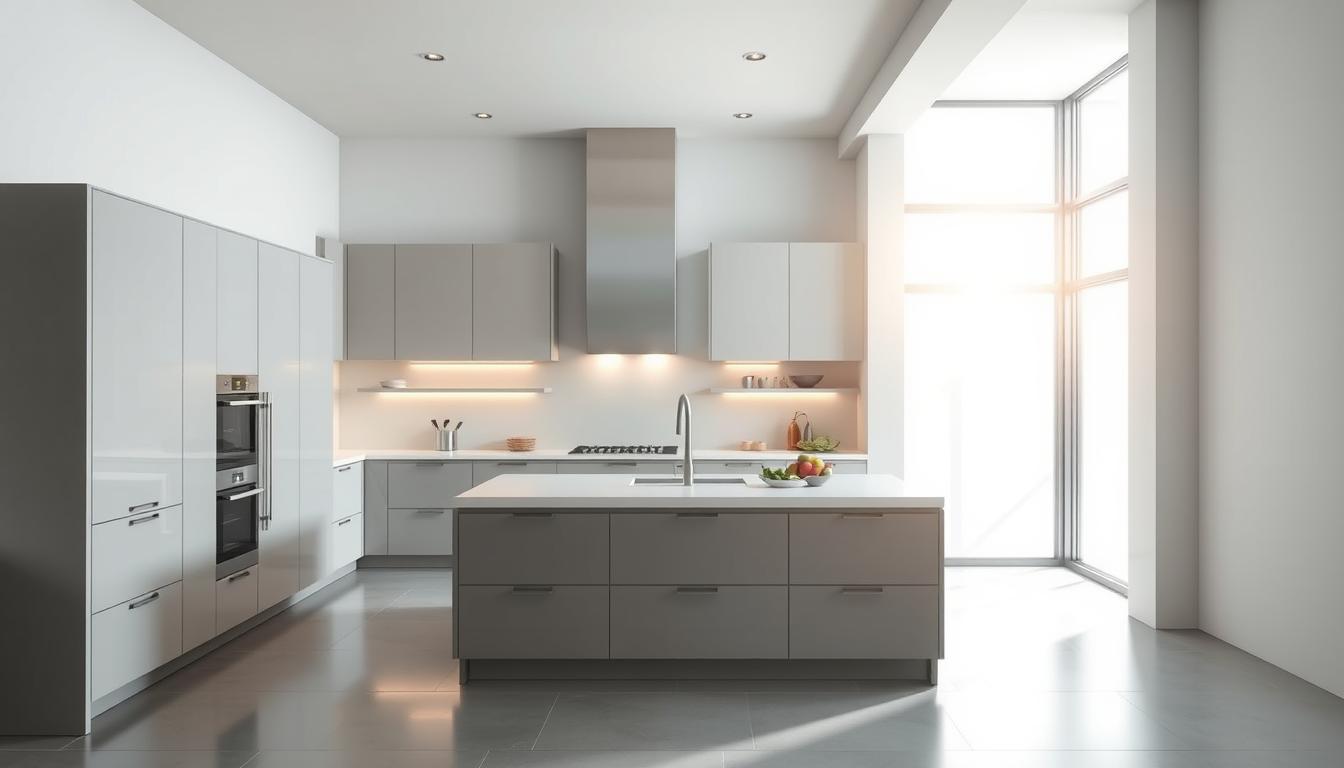
Choosing appliances that match your kitchen’s style is important. Think about the appliance’s style, color, and finish. For example, stainless steel adds a modern look, while copper or bronze brings a warm, vintage vibe.
Timeless Design Elements
Adding classic elements, like traditional cabinets or flooring, makes your kitchen stylish for years. These elements also improve your kitchen’s function. They offer lots of storage and comfortable spaces to work.
Finish Options and Durability Factors
The finish of your appliances affects their look and how long they last. You can choose from stainless steel, matte black, or white. Each has its own benefits and drawbacks. Stainless steel is durable but shows fingerprints, while matte black is sleek but can scratch.
| Finish Option | Durability | Aesthetic Appeal |
|---|---|---|
| Stainless Steel | High | Modern, Sleek |
| Matte Black | Medium | Sleek, Sophisticated |
| White | Medium | Classic, Clean |
Ergonomics and Accessibility Features
Ergonomics and accessibility are crucial in kitchen design. Think about features like adjustable countertops and ergonomic handles. These make your kitchen easier to use, especially for those with mobility issues.
By balancing design with function, you create a kitchen that’s both beautiful and practical. Using kitchen hacks like optimizing your kitchen’s layout and using vertical space can make it even more efficient.
Major Appliance Categories and Selection Criteria
The heart of any kitchen is its major appliances. They come in different categories to meet various needs. It’s important to know the main categories and what to look for when choosing kitchen appliances.
Refrigeration Units
Refrigeration units are key in any kitchen. When picking a refrigerator, think about the layout and how much you can store.
Configuration Options and Storage Capacity
You can pick from top-freezer, bottom-freezer, side-by-side, or French door models. Each type has its own storage space and how easy it is to reach things. For example, French door models often have more flexible storage with adjustable shelves.
Cooling Technology Differences
Refrigerators also differ in how they cool. Some use dual compressors for better cooling, while others have advanced tech like multi-air flow for even temperatures. Knowing these differences helps you find the right one for you.
Cooking Appliances
Cooking appliances are also crucial. The choice between a range and separate cooktop and oven depends on several factors.
Range vs. Separate Cooktop and Oven
Ranges are compact, with both cooking surface and oven in one. Separate cooktops and ovens offer more flexibility and are better for bigger kitchens or specific cooking needs.
Fuel Type Advantages and Limitations
Choosing between gas, electric, and induction cooktops depends on your cooking style and kitchen setup. Gas cooktops give precise control, while electric and induction offer different energy efficiency and safety features.
Dishwashers and Cleanup Solutions
Dishwashers are key for quick cleanup. When picking a dishwasher, look at noise levels, efficiency ratings, and how much you can load it with.
Noise Levels and Efficiency Ratings
Today’s dishwashers vary in noise levels, with some being very quiet. Efficiency ratings, like Energy Star, are also important for saving energy and the environment.
Loading Capacity and Configuration Options
The dishwasher’s capacity and how you can arrange it affect its use. Choose models with adjustable racks and various wash cycles for different dishes and utensils.
Understanding these major appliance categories and what to look for helps you choose better. Reading appliance reviews can also give you insights into their performance and reliability.
Smart Technology Integration in Modern Kitchens
Adding smart tech to your kitchen can make cooking better. It’s not just about new gadgets. It’s about making your kitchen more efficient, fun, and safe.
Connected Appliance Ecosystems
A connected kitchen lets your devices talk to each other and you. You can control them from afar, get alerts when they’re done, and have them adjust settings for your recipes.
Voice Control and Automation Benefits
Voice control and automation offer big perks. They let you cook without using your hands, which is handy. They also help save energy and make cooking smoother.
Key benefits include:
- Enhanced convenience
- Increased efficiency
- Improved safety
Security and Privacy Considerations
Connected tech comes with security and privacy worries. Make sure your appliances are on a safe network and your software is updated. This keeps your data safe.
Future Technology Compatibility
Choose smart appliances that work with future tech. Go for ones with modular designs or that get regular updates. This keeps your kitchen tech-savvy.
Brand Reliability and Customer Satisfaction
Choosing kitchen appliances means looking at the brand’s reliability and customer satisfaction. A brand’s good name comes from quality products and services that meet customer needs.
Interpreting Consumer Reviews Effectively
Consumer reviews are key to judging a brand’s reliability. Look for common themes in feedback, like frequent complaints or praise. Notice the overall rating and the number of reviews. A product with many positive reviews is usually more reliable than one with fewer reviews.
Professional Testing and Rating Systems
Professional tests and ratings give unbiased views on kitchen appliances. Groups like Consumer Reports do thorough tests on performance, durability, and safety. These ratings help you compare different models and brands fairly.
Customer Service Quality Assessment
Customer service quality is crucial for brand reliability. Check how a brand answers questions, deals with complaints, and offers support after sales. A brand that is quick to help and responsive is more likely to support its products.
Manufacturer Support Networks
A strong support network from the manufacturer is vital for fixing any appliance issues. Look for brands with good warranties, customer support lines, and service networks.
- Check online reviews and ratings from multiple sources.
- Research professional testing and ratings.
- Evaluate the brand’s customer service reputation.
- Assess the manufacturer’s support network.
Installation Considerations and Requirements
Installing kitchen appliances is more than just putting them in place. It’s about planning your kitchen layout and what you need for utilities. You’ll need to think about several important things to make the process go smoothly.
DIY vs. Professional Installation Analysis
First, you must decide if you’ll do the installation yourself or hire a pro. DIY can be cheaper, but professional installation ensures it’s done right and safely. This might save you from maintenance troubles later on.
Utility Requirements and Modifications
Your appliances need specific utilities like electricity or gas. Knowing this early helps you plan any changes to your kitchen. This ensures your appliances work well and fit your space.
Proper Disposal of Old Appliances
Don’t forget about getting rid of your old appliances when you install new ones. Proper disposal is good for the planet and follows local laws. Many stores offer appliance removal services with their installation packages.
Delivery and Installation Scheduling
Setting up a time for delivery and installation needs careful planning. You must work with the store and the installation team to find a good time. Try to schedule during less busy times for quicker service.
Conclusion: Making an Informed Kitchen Appliance Decision
Choosing the right kitchen appliances is a big decision. It involves thinking about your budget, the space you have, how energy-efficient they are, and how they look. You’ve looked at all these factors carefully.
Understanding the importance of keeping them in good shape, the reliability of the brand, and how to install them is key. This helps you pick appliances that work well and look good in your kitchen.
The secret to a great kitchen is finding the right mix of function, style, and efficiency. This way, you’ll have a kitchen that looks amazing and works perfectly, making cooking a joy.