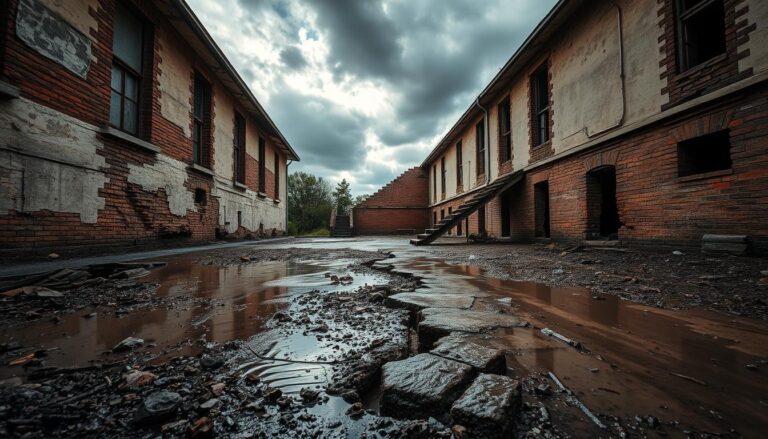
Did you know that approximately 11.7 million homes in the U.S. suffer from water leakage due to poor drainage? This staggering statistic highlights a significant issue that many property owners face. When water doesn’t flow properly, it can wreak havoc on foundations, walls, and walkways.
Moreover, around 2.8 million homes experience water intrusion specifically in basements or crawlspaces. It’s essential to understand that water rarely causes just one problem. Instead, poor drainage can lead to multiple issues simultaneously, affecting various areas of your property.
Experts Nick Gromicko and Ben Gromicko emphasize a three-part water-management process: surface drainage, subsurface drainage, and foundation waterproofing. This article will guide you through how water moves across the ground and through soil toward your property, helping you avoid costly damages.
Effective drainage isn’t about masking puddles; it’s about creating a reliable path that moves water away from your property. Expect practical advice on materials, grading, French drains, inspections, and repairs.
Your home causing you trouble? Call us at (727)-625-1374 or email contact@wsvgroup.com.
Understanding the Impact of Poor Drainage
Water damage can silently undermine your property’s integrity. When water collects near a foundation, it creates hydrostatic pressure. This force can push through joints, cracks, and porous materials, leading to serious issues.
Over time, saturated soil can cause shifting foundations and weakened walkways. You may notice wall staining, mold growth, or wood rot. These problems can escalate, often starting with subtle signs like a damp smell or a slippery path.
Remember, a small puddle after a storm might seem minor. However, repeated exposure to water can lead to hidden damage that compounds over time. It’s essential to address these issues early to avoid costly repairs.
Key Components of Effective Drainage Systems
Effective drainage systems rely on the right materials and proper installation. According to the 2024 IRC Section R405.1, approved materials include drainage tiles, drainage pipes, gravel, and crushed stone. When installed correctly, these components work together to prevent water buildup around your property.
Placement is crucial. Systems must be installed at or below the top of the footing to intercept water before it builds pressure against the foundation wall. Gravel or crushed stone drains should extend at least 1 foot beyond the footing and rise 6 inches above its top.
Drainage material selection and placement
Drainage tiles or perforated pipes require at least 2 inches of washed gravel beneath them and 6 inches of the same material above. This ensures optimal performance and prevents clogging. Using filter membranes can help keep soil and silt out of the system, but be cautious—unprotected perforations can easily clog, rendering the system ineffective.
Protection mechanisms and proper coverage
When selecting materials, consider local soil conditions, climate, and expected rainfall. Durability and the available discharge route are also important factors. A well-planned drainage system not only protects your property but also enhances its longevity.
Surface vs Subsurface Drainage Explained
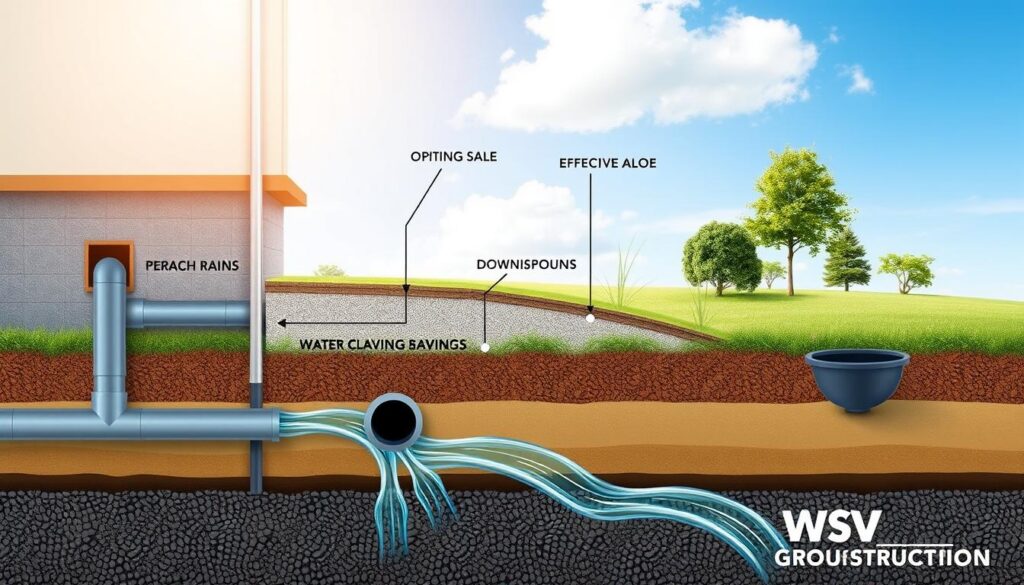
Understanding how water moves across your property is crucial for effective management. Surface water consists of runoff from rainfall, sloped yards, downspouts, and patios. This water is visible and can quickly lead to problems if not managed properly.
In contrast, subsurface water is less obvious. It moves through the soil, creating saturated ground and hydrostatic pressure. This hidden pressure can be damaging over time.
While French drains are a popular solution, they are not a universal fix. These gravel-filled trenches contain perforated pipes that redirect subsurface water to a safe outlet. Typically, they are about 12 inches wide and 12-16 inches deep. However, site conditions can influence the final design.
It’s essential to maintain a consistent slope of at least 1% toward the outlet for effective drainage. While a French drain can alleviate saturated soil, it won’t resolve issues like poor grading or roof runoff. For surface runoff, consider using grading, swales, and channel drains for more direct solutions.
How Drainage Systems Protect Your Property
Properly managing water flow is essential for safeguarding your property. Effective drainage systems are designed to prevent water intrusion and reduce hydrostatic pressure. This is vital for maintaining the integrity of your foundation and surrounding structures.
Gutters and downspouts are the first line of defense. They collect roof runoff and direct it away from the building. This prevents water from cascading beside the structure and eroding soil near the foundation.
Grading and swales also play a significant role. They create a controlled route for rainfall, ensuring water does not collect against walls or beneath walkways. Additionally, catch basins and channel drains serve as useful collection points around hard surfaces like patios and driveways.
When direct daylight outlets are unavailable, dry wells and rain gardens provide alternative discharge or infiltration options. These systems help manage excess water effectively.
Moreover, proper drainage enhances tenant safety. It addresses issues like slippery walkways, flooded parking areas, and standing water, which can attract pests and create slip hazards. Reducing water near the foundation lowers hydrostatic pressure, limiting the chances of water intrusion into basements and crawlspaces.
Educate owners on drainage around buildings
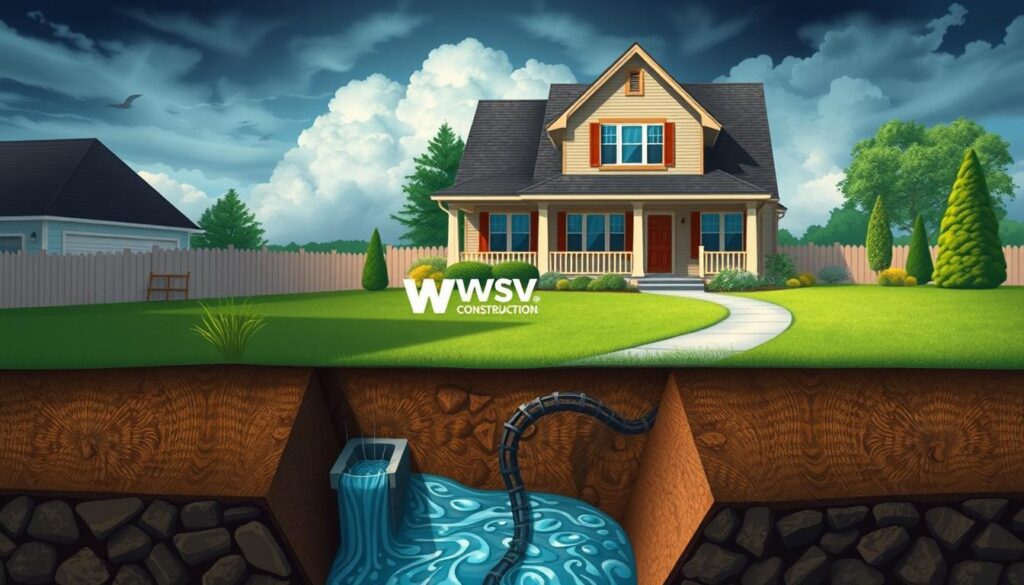
Understanding local building codes is vital for maintaining the integrity of your property. The 2024 IRC Section R405.1 generally requires drainage around concrete or masonry foundations that retain earth and enclose below-grade usable spaces. This regulation is crucial for preventing water-related issues that can compromise your structure.
Foundation drainage may discharge by gravity or mechanical means, such as a sump pump, depending on site conditions. It’s essential to consult with a qualified professional to ensure compliance with these codes.
Moreover, the InterNACHI Standards Section 3.2.J directs inspectors to evaluate surface drainage and grading that may adversely affect a structure. Inspectors are also required to report any signs of active water penetration, including seepage, staining, or standing water, as per Section 3.3.III.B.
Keep in mind that drainage may not be required in well-drained Group I soils, but soil conditions can vary significantly across a property. To fully understand concealed drainage work, you may need to review visible evidence, construction documents, and permits.
Ultimately, code compliance is just the starting point. Your system must effectively move water away from the building to ensure long-term protection.
Practical Steps for Assessing Drainage Issues
Assessing drainage issues requires a systematic approach to ensure your property remains protected. Start by examining the slope of the ground. According to the 2024 IRC R401.3 recommendation, the ground should slope at least 6 inches within the first 10 feet away from the structure.
Next, inspect foundation walls and floors for signs of trouble. Look for:
- Seepage
- Staining
- Efflorescence
- Mold and mildew
- Deteriorated materials
- Standing water
- Rust stains
Utilize a moisture meter at the lower foundation wall, where water issues often appear first. Follow the path of gutters, downspouts, and catch basins to ensure proper flow.
Check if gravity drainage has a usable slope and if the outlet discharges appropriately away from the foundation. During new construction, document the drainage installation before backfill conceals it.
Lastly, reviewing permits and construction drawings can clarify any uncertainties about the drainage path.
Drainage Myths Busted: Real Talk on Water Management
It’s time to set the record straight about common drainage myths. Many misconceptions can lead to persistent issues that might go unnoticed until it’s too late.
For instance, clay and compacted soil can drain slowly, remaining saturated long after rainfall. Just because your lawn looks lush doesn’t mean the soil beneath is healthy. In fact, waterlogged soil can be soft and unstable.
Another common myth is that simply adding dirt against your house will fix drainage issues. Without proper grading, this can trap water next to your foundation, leading to more problems.
Gutters and yard drainage are interconnected. If roof runoff is discharged too close to your home, it can overwhelm the area and cause water to pool.
Even standing water for just a few hours can weaken soil and contribute to erosion. Moreover, French drains are not a one-size-fits-all solution; they primarily address subsurface water and may not fix surface runoff issues.
Finally, be cautious when hiring professionals. Not every landscaper or contractor specializes in drainage design, soil behavior, or effective discharge planning.
Maintenance and Repair Strategies for Long-Lasting Drainage
Regular maintenance of your drainage systems can save you from costly repairs. Keeping these systems in good shape is essential for avoiding water-related issues. A few simple steps can make a big difference.
Start with routine inspections. Look for leaves, dirt, and debris in gutters, downspouts, and catch basins. Blockages can cause water to back up, leading to potential damage.
Regular inspection tips and cleaning practices
- Inspect gutters, downspouts, and exposed pipes regularly.
- Clean debris before major rainfall to prevent backups.
- Check for visible damage, clogs, or separation in the system.
Seasonal maintenance strategies to prolong system performance
Different seasons require different maintenance tasks:
| Season | Maintenance Task |
|---|---|
| Spring | Check for winter damage and clean accumulated debris. |
| Summer | Ensure systems can handle heavy rainfall without overflow. |
| Fall | Remove leaves from gutters and catch basins. |
| Winter | Monitor for freezing temperatures and ice blockages. |
Repair any damaged pipes or outlets promptly. Small inspections are cheaper than ignoring visible failures. Addressing these issues early can prevent larger structural repairs down the line.
Conclusion
Understanding the journey of water from rainfall to safe discharge is essential for effective protection. Proper management of water flow can prevent significant issues that threaten your property’s integrity.
Compliance with the 2024 IRC Section R405.1 requirements highlights the importance of footing placement, gravel coverage, and filter protection. Each component, including gutters, swales, and catch basins, plays a vital role in managing various water conditions.
Regular inspections can help identify problems like seepage, mold, and standing water before they escalate. Avoid quick fixes that overlook the real sources of drainage challenges.
Your home causing you trouble? Call us at (727)-625-1374 or email contact@wsvgroup.com for practical guidance.