
If you live in St. Petersburg, you know hurricanes are a big deal. You don’t want your home to be caught off guard. This could lead to damage and a lot of stress.
Preparing your roof before a storm is key to protecting your home. A strong roof can help keep your home safe from wind and rain. If you’re worried about your roof, get help from the experts. Call us at (727)-625-1374 or email contact@mail.wsvgroup.com for assistance.
Key Takeaways
- Prepare your roof before the hurricane season to avoid damage.
- A well-maintained roof can withstand strong winds and rain.
- Regular inspections can help identify potential issues.
- Professional assistance can ensure your roof is storm-ready.
- Don’t wait until it’s too late; take proactive steps today.
Understanding Hurricane Damage
When a hurricane hits, your roof is on the frontline. It’s crucial to understand the potential damage to protect your home. Hurricanes bring high winds and heavy rainfall, both of which can harm your roof’s integrity.
High winds can lift shingles, damage flashing, and even tear off parts of your roof. This leaves it open to water intrusion. The wind can also turn loose items into projectiles, damaging your roof or other parts of your home.
What Can a Hurricane Do to Your Roof?
A hurricane’s impact on your roof depends on several factors. These include the storm’s intensity, your roof’s condition before the storm, and the roofing materials used. Common damage includes:
- Lifting or loss of shingles
- Damage to roof flashing
- Clogged gutters and downspouts
- Water intrusion due to compromised roofing
Understanding these risks is key to protecting your roof and home.
Signs of Roof Damage from Past Storms
If your roof has been through a hurricane, inspect it for damage. Look for signs like:
| Signs of Damage | Description |
|---|---|
| Missing or lifted shingles | Shingles that are missing, cracked, or lifted can indicate wind damage. |
| Granule loss | Excessive granule loss on asphalt shingles can signal aging or storm damage. |
| Water stains | Water stains on ceilings or walls can indicate leaks due to roof damage. |
Spotting these signs early can help you fix issues before they get worse.
Understanding hurricane damage to your roof helps you prepare and protect your home. Regular inspections and maintenance are crucial to keep your roof strong against storms.
Importance of Roof Inspection
As hurricane season approaches, checking your roof is key to keeping your home safe. A good roof inspection can spot weak spots or damage. This damage might get worse with strong winds or debris.
Why Inspect Your Roof Before a Hurricane?
Checking your roof before a hurricane is vital. It lets you fix any issues that could cause big damage during the storm. By fixing problems early, you avoid expensive repairs and keep your home strong.
Key reasons for a pre-hurricane roof inspection include:
- Identifying loose or missing shingles that could be torn off by strong winds
- Detecting damaged or rusted flashing that could lead to leaks
- Checking for signs of wear around chimneys, vents, and skylights
How to Perform a Roof Inspection
To inspect your roof, look for damage or wear. Check for cracked or missing shingles and damaged flashing. Also, check your roof’s straps and other securing elements.
| Inspection Area | What to Look For |
|---|---|
| Shingles and Tiles | Cracks, breaks, or missing pieces |
| Flashing | Rust, damage, or improper sealing |
| Roof Straps | Signs of wear, rust, or loosening |
| Gutters and Downspouts | Clogging, damage, or sagging |
For a closer look, use binoculars from the ground or climb up safely. But always put safety first.
Essential Roof Preparations
To protect your home from hurricane damage, start by securing your roof. A well-prepared roof can greatly reduce damage risk to your home.
Secure Loose Shingles and Tiles
Loose shingles and tiles can become projectiles in high winds. They can damage your roof, windows, and neighboring properties. Check your roof for loose or missing shingles and tiles. Secure them with the right roofing adhesive or nails.
Reinforce Roof Flashing
Roof flashing around chimneys, vents, and skylights prevents water intrusion. Make sure the flashing is securely attached and not damaged. Use a high-quality flashing material that resists corrosion.
Clear Debris from Gutters and Drains
Clogged gutters and drains can lead to water accumulation. This can cause significant damage to your roof and home. Clean your gutters and downspouts. Ensure they are securely attached to your home. Consider installing gutter guards to prevent debris.
Here’s a summary of the key roof preparation tasks and their benefits:
| Task | Benefit |
|---|---|
| Secure Loose Shingles and Tiles | Prevents shingles and tiles from becoming projectiles and reduces roof damage |
| Reinforce Roof Flashing | Prevents water intrusion around chimneys, vents, and skylights |
| Clear Debris from Gutters and Drains | Prevents water accumulation and reduces risk of roof and home damage |
By following these essential roof preparations, you can significantly enhance your home’s resilience to hurricane-force winds.
Tools and Materials Needed for Preparation
To get your roof ready for a hurricane, you’ll need certain tools and materials. The right equipment is key to securing your roof. It ensures it can handle the storm.
Basic Tools for Roof Prep
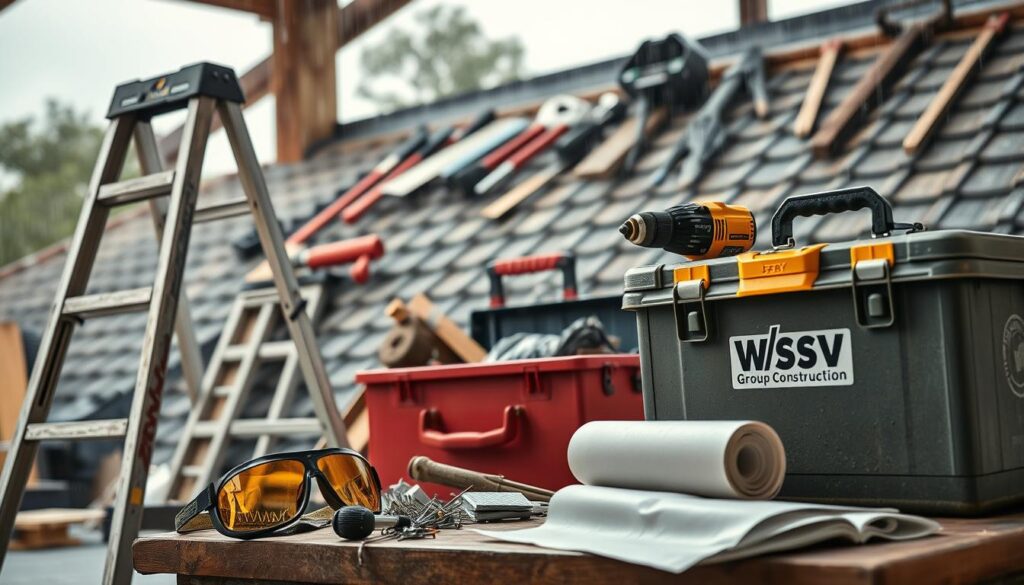
You’ll need basic tools for repairs and adjustments. Some must-haves include:
- Hammer: For driving nails and fitting parts together.
- Ladder: To safely reach your roof.
- Utility knife: For cutting various materials.
- Pliers: For gripping and bending objects.
- Tape measure: To measure roof dimensions and materials.
Recommended Materials for Reinforcement
For extra security, use these materials:
- Tarps: To cover damaged or exposed areas.
- Roofing cement: To seal gaps and secure shingles.
- Roofing nails: To fasten shingles and other roofing materials.
- Weather-resistant tape: To seal joints and edges.
Having these tools and materials ready is part of a good emergency plan. It helps you prepare your roof well for a hurricane.
Working with Roofing Professionals
Getting your roof ready for a hurricane is more than just a quick look. It needs the skills of roofing experts. They can spot weak spots and fix or strengthen your roof to handle strong winds and debris.
When to Call a Roofer
It’s smart to call a roofer before hurricane season starts. This gives them time to check your roof and make any needed fixes. If you see roof damage, like missing shingles or leaks, call a pro right away.
Benefits of Professional Roof Inspections
Professional roof checks have many advantages. They can find problems early, before they get big. Roofing pros have the tools and know-how to thoroughly examine your roof. They look for damaged, missing, or loose shingles and make sure flashing and other key parts are in good shape.
A pro inspection also gives you a detailed report on your roof’s state. This is useful for insurance claims or when planning repairs. Plus, many roofing experts can suggest ways to make your roof more hurricane-resistant.
| Inspection Component | What to Look For | Benefit |
|---|---|---|
| Shingles/Tiles | Damage, wear, or missing pieces | Prevents leaks and structural damage |
| Flashing | Signs of rust, damage, or improper installation | Ensures watertight seals around chimneys, vents, etc. |
| Gutters and Downspouts | Clogging, damage, or sagging | Proper water drainage, preventing foundation damage |
By teaming up with roofing pros, you can make sure your roof is hurricane-ready. This protects your home and family.
Common Roof Types in St. Petersburg
In St. Petersburg, you’ll find many roof types, each with its own benefits. Knowing these options helps you choose the right roof for your home.
The most common roofs in St. Petersburg are asphalt shingles, tile roofing, and metal roofs. Each has its own advantages and things to consider.
Asphalt Shingles
Asphalt shingles are a favorite in St. Petersburg because they’re affordable and easy to put on. They come in many colors and styles, so you can make your home look just right.
Benefits of Asphalt Shingles:
- Cost-effective
- Easy to install and repair
- Available in various colors and styles
Tile Roofing
Tile roofing is also popular in St. Petersburg for its durability and good looks. With the right care, tile roofs can last for decades.
Advantages of Tile Roofing:
- Long-lasting
- Resistant to fire and rot
- Enhances the home’s curb appeal
Metal Roofs
Metal roofs are becoming more popular in St. Petersburg for their energy savings and toughness. They can handle heavy rain and strong winds well.
Benefits of Metal Roofs:
- Energy-efficient
- Durable and long-lasting
- Resistant to extreme weather conditions
Understanding these roof types helps you get your home ready for hurricane season. It also helps you make smart choices about your roof.
Preparing Your Property for the Storm
Before a hurricane hits, it’s crucial to get your property ready. This helps prevent damage and keeps your home safe. There are a few important steps to take.
Trim Trees and Limbs
Trimming trees and limbs is a key part of getting ready. Branches that hang over your roof, windows, and doors can cause a lot of harm in strong winds. Cutting these branches can help protect your home from debris.
- Check your trees and shrubs for dead or weak branches.
- Use the right pruning methods to avoid harming the tree or making it sick.
- If you’re not sure about trimming big branches, think about getting a professional arborist.
Secure Outdoor Furniture and Equipment
Outdoor furniture and equipment can turn into dangerous objects in high winds. They can damage your home, your neighbors’, and even hurt people. It’s important to keep these items from becoming projectiles.
- Move light furniture inside or tie it down to the ground.
- Use straps or anchors to keep heavy items like grills and heaters in place.
- Store outdoor items in a safe shed or garage if you can.
By following these steps, you can lower the risk of damage to your property. This helps keep you safe during the hurricane. Remember, getting ready is the best way to face the storm.
It’s also important to have an emergency plan. Know your evacuation routes, have a safe place to go, and stay updated on the weather. With property preparation and a good emergency plan, you’ll feel more confident and secure during the hurricane.
Emergency Supplies for Hurricane Season
Hurricane season can be unpredictable. It’s vital to have a well-stocked emergency kit. Having emergency supplies is key to your safety and comfort during and after the storm.
What to Include in Your Hurricane Kit
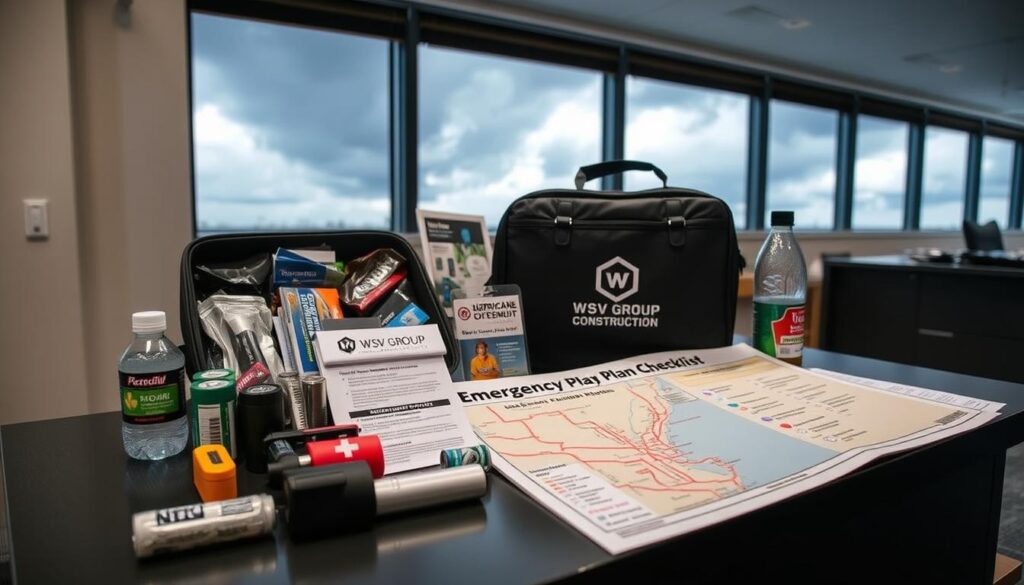
A good hurricane kit should have many essential items. These include:
- Non-perishable food and water (at least 3 days’ supply)
- Flashlights, batteries, and a battery-powered radio
- First aid kit and any necessary medications
- Personal hygiene items and a multipurpose tool
- Important documents (e.g., insurance policies, identification) in a waterproof container
Don’t forget to add comfort items like blankets, games, or books. They help during a long power outage.
Importance of Having a Backup Plan
Having a backup plan is as crucial as emergency supplies. Know safe zones in your home and have an evacuation plan. Stay updated on weather through reliable sources.
Staying informed is key. Keep a battery-powered radio and/or a NOAA Weather Radio for updates and instructions.
Also, make sure all family members know the plan and their roles. Practice your plan to ensure everyone is ready.
Insurance Considerations
Before a storm hits, check your homeowners insurance policy. Knowing what your policy covers and what it doesn’t can prevent unexpected costs after a hurricane.
Reviewing your policy is more than just looking at coverage limits. It’s also about understanding deductibles and exclusions, especially for hurricane or wind damage.
Review Your Homeowners Insurance Policy
To make sure you’re covered, follow these steps:
- Check if your policy covers roof damage, including wind and rain damage.
- Know your deductible, especially if it’s higher for hurricane damage.
- Look for any exclusions or limits in your policy.
- Think about getting extra coverage, like flood insurance, which is often not included.
It’s also important to tell your insurance company about any recent roof work. This can affect your coverage and how much you pay.
Documenting Roof Condition for Insurance Claims
Before a hurricane, document your roof’s condition. This makes filing insurance claims easier. Here’s how:
- Take clear, dated photos of your roof from different angles.
- Keep records of any maintenance or repairs, including receipts and before-and-after photos.
- Consider hiring a professional to inspect your roof and provide a detailed report.
By following these steps, you’re ready for hurricane season. You’ll know your insurance covers you well. This proactive approach helps with smoother claims and gives you peace of mind.
Resources for Hurricane Preparedness
As hurricane season gets closer, knowing your local authorities and online resources is crucial. Being well-informed can save your safety and property.
Local Authorities and Emergency Services
Local authorities and emergency services are key in hurricane preparedness. In St. Petersburg, the Pinellas County Emergency Management department is vital. They give updates on weather, evacuation orders, and shelters.
It’s important to watch local news and official websites for the latest. You can also sign up for emergency alerts from the City of St. Petersburg. This way, you get timely updates and instructions.
Knowing what local law enforcement, fire departments, and other services do helps. It makes facing hurricane season easier.
Online Resources for Hurricane Information
Many online resources help you prepare for hurricanes. The National Hurricane Center (NHC) offers vital storm forecasts and advice. Visit their website at nhc.noaa.gov for updates.
Weather apps, emergency guides, and community forums are also useful. They let you share tips and advice with others. Using these resources helps you understand risks and make smart choices.
By using local authorities and online resources, you can be well-prepared for hurricane season. Staying informed, having a plan, and knowing where to get help are key to safety.
After the Storm: What to Do Next
After the hurricane, it’s key to check your roof for damage. The storm’s aftermath can feel overwhelming. But, acting fast can help avoid more harm to your home.
Assessing Damage to Your Roof
Look at your roof for missing shingles, broken tiles, or wear around chimneys, vents, and skylights. Check for:
- Missing or loose shingles
- Cracked or broken tiles
- Signs of water intrusion or leaks
- Damage to roof flashing around chimneys and vents
Documenting the damage is key for insurance claims. Take photos and videos of the roof damage and any inside your home.
Filing Insurance Claims
Filing an insurance claim can be tricky. To make it easier:
- Read your insurance policy to know what’s covered.
- Collect all your documents, like photos, videos, and repair estimates.
- Call your insurance provider right away to start the claim.
Being detailed and thorough is crucial when filing your claim. This way, you’ll get the right compensation for repairs.
By following these steps, you can handle the post-storm process better. This will help you get your home back to normal quickly.
Contact Us for Help
If your home’s roof is giving you trouble, especially during hurricane season, you need help fast. At WSV Group, we know how crucial a strong roof is for your property’s safety.
Expert Roofing Assistance at Your Service
Our team offers excellent roofing services like inspections, repairs, and maintenance. Whether you’re getting ready for a hurricane or need help after one, we’re here. Count on us for hurricane help and roofing assistance to keep your home safe.
Don’t wait until it’s too late. Contact us today for a consultation or to learn more about our services. Call us at (727)-625-1374 or email at contact@mail.wsvgroup.com. We’re ready to help protect your home and family.
By reaching out to us, you’re taking a big step towards a hurricane-ready roof. Our experts will check your roof and give you tailored advice for improvement. Don’t hesitate to contact us for the help you need.
FAQ
What are the most common types of roof damage caused by hurricanes?
Hurricanes can damage roofs in many ways. They can cause shingles to be missing or loose. They can also damage or tear off roof coverings. High winds and flying debris can compromise roof structures.
How often should I inspect my roof to ensure it’s hurricane-ready?
You should check your roof at least twice a year. Before hurricane season starts, it’s a good idea to inspect it. This helps find and fix any problems or damage.
What are the benefits of securing loose shingles and tiles on my roof?
Securing loose shingles and tiles is very important. It stops further damage from high winds. It also lowers the risk of roof failure and saves you money on repairs or replacements.
How can I reinforce my roof flashing to prepare for a hurricane?
To strengthen roof flashing, first check for any damage or looseness. Then, re-seal or re-attach it as needed. Make sure it’s securely attached to prevent water damage.
What tools and materials do I need to prepare my roof for a hurricane?
You’ll need basic tools like hammers and ladders. Roofing cement is also important. You might also need tarps and roof straps to prepare your roof.
When should I call a professional roofer to inspect and repair my roof?
If you’re not sure about inspecting or fixing your roof, call a professional roofer. They can ensure your roof is ready for a hurricane, especially if you find significant damage.
What are the benefits of having a backup plan in case of a hurricane?
Having a backup plan is crucial. It includes emergency supplies and an evacuation plan. This ensures your safety and that of your loved ones during a hurricane.
How can I document my roof’s condition for insurance purposes?
Take photos and videos of your roof, including any damage. Keep records of maintenance and repairs. This helps support your insurance claims.
What resources are available to help me prepare for a hurricane?
Local authorities, emergency services, and online resources are great for help. Websites and guides can give you important information to prepare for a hurricane.
How can I assess damage to my roof after a hurricane?
Inspect your roof carefully for damage. Take photos and videos. If unsure about the damage or repairs needed, consult a professional roofer.
What should I include in my hurricane kit?
Your hurricane kit should have essential supplies. Include food, water, first aid materials, and a battery-powered radio. These items help you survive the storm and its aftermath.
How can I secure outdoor furniture and equipment to prevent debris?
To prevent outdoor furniture and equipment from becoming projectiles, tie or weight them down. Or, bring them inside. This keeps them safe during high winds.
What are the benefits of trimming trees and limbs around my property?
Trimming trees and limbs reduces the risk of damage from falling branches. It also minimizes the chance of power outages and other hazards.
How can I review my homeowners insurance policy to ensure I’m adequately covered?
Review your policy to know what’s covered, including roof damage. If unsure, talk to your insurance provider. This ensures you have enough coverage.