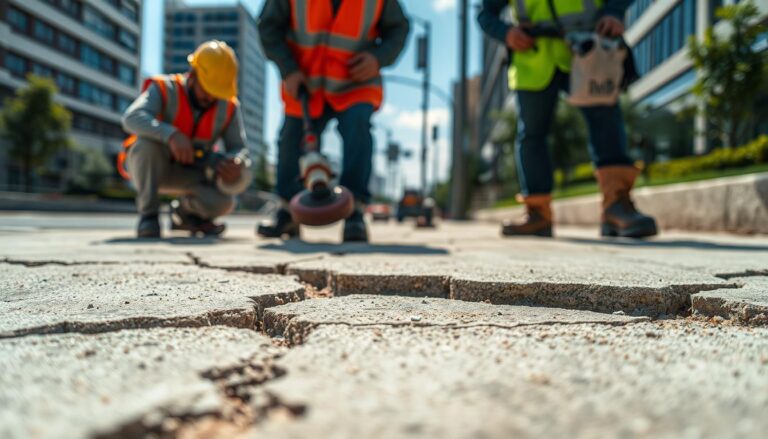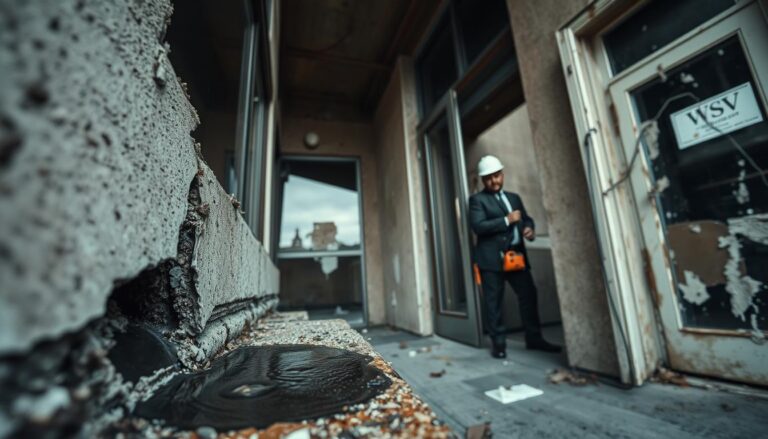
Did you know that nearly 80% of concrete structures experience some form of damage within their first 10 years? This staggering statistic highlights the importance of understanding when to address issues like cracks, spalling, and trip hazards. Ignoring these problems can lead to serious safety risks and costly repairs down the line.
As a property owner, recognizing the signs of wear and tear is crucial. Concrete is a long-term asset that requires consistent maintenance. Regular inspections can help you identify potential issues before they escalate. Whether it’s small cracks or larger spalling areas, timely action can preserve the structural integrity of your property.
In this article, we’ll delve into the various types of damage, their causes, and effective repair methods. By understanding these elements, you can make informed decisions that enhance safety and extend the life of your structures.
Key Takeaways
- Most concrete structures face damage early in their lifespan.
- Regular inspections are essential for maintaining structural integrity.
- Timely repairs can prevent costly future issues.
- Understanding the types of damage helps in choosing the right repair method.
- Concrete is a valuable asset that requires ongoing maintenance.
Understanding Concrete Damage and Its Implications
Many property owners are surprised to learn that concrete damage can start within a mere ten years. Recognizing cracks, spalling, and trip hazards early can be the difference between a minor repair and a significant structural failure. Addressing these issues promptly is essential for maintaining safety and integrity.
Weather and wear are primary causes of concrete damage. In regions with harsh freeze-thaw cycles, expansion and contraction can lead to serious issues like scaling and joint deterioration. Moisture retention in concrete slabs can also accelerate corrosion, weakening the overall structure.
Ignoring minor problems increases the risk of liability and safety hazards. A simple inspection can reveal issues that, if left unattended, could escalate into costly repairs.
“Proactive management is the key to preserving your property’s value.”
The Importance of Timely Repairs
Understanding the timeline of concrete damage is crucial for property maintenance. Timely concrete repair is the most effective way to enhance safety and reduce liability risks. Addressing issues promptly helps prevent minor cracks from escalating into major problems.
Preserving the structural integrity of your buildings requires a disciplined maintenance schedule. Regular inspections can catch small cracks before they lead to costly repairs. By prioritizing timely action, you protect your investment and ensure a safe environment.
Delaying necessary repairs can result in higher costs later. Water and salt damage can lead to full replacements if not addressed quickly. Our approach focuses on the longevity of your structures, ensuring every dollar spent contributes to a safer environment.
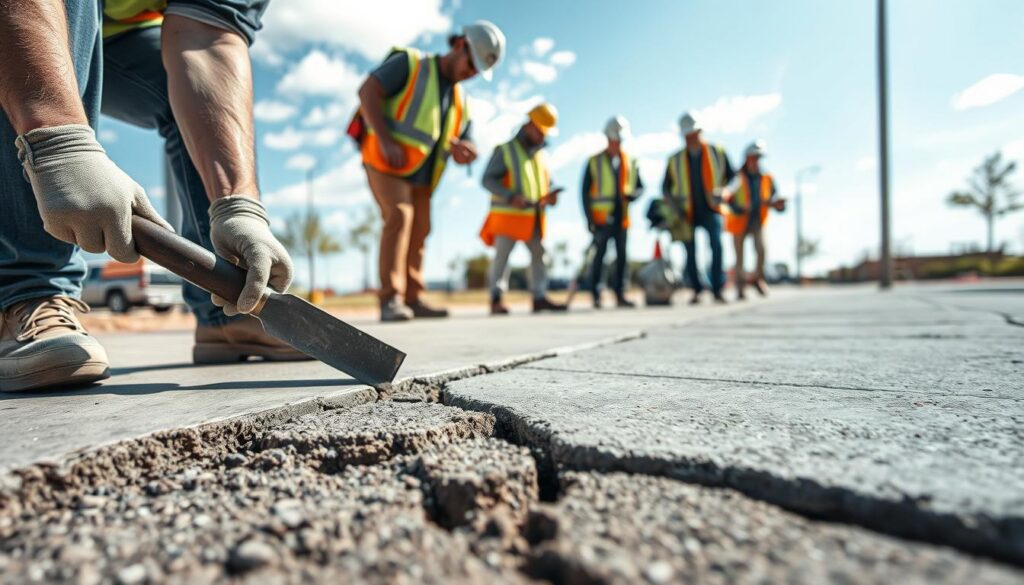
Make concrete repairs practical for owners and managers
Concrete damage can manifest sooner than expected, often within the first decade. To address this effectively, a strategic approach is necessary. A thorough assessment of the damage helps determine the right repair method. This assessment considers load requirements and environmental exposure.
When budgeting for repairs, prioritize immediate safety fixes. This ensures that your property remains safe while planning for long-term maintenance. Proper maintenance preserves the structural integrity of your assets and prevents future issues.
Hiring a professional contractor is crucial. They will evaluate movement and moisture levels in your concrete systems. This evaluation guides the choice between repair and replacement strategies. Documenting each step of the project is essential. It allows managers to track material performance and quality.
| Repair Method | Cost Estimate | Effectiveness |
|---|---|---|
| Patch Repair | $5-$10 per sq ft | High |
| Overlay | $6-$12 per sq ft | Medium |
| Full Replacement | $15-$30 per sq ft | Very High |
By addressing drainage and water issues during repairs, you protect surfaces against future freeze-thaw cycles. Allocating your maintenance budget wisely can help avoid recurring damage and liability. Our goal is to provide a professional approach that keeps your property safe and attractive.
Exploring Repair Methods for Concrete Cracks and Spalling
Concrete surfaces can show signs of wear much sooner than expected, often leading to urgent repair needs. Addressing these issues is essential to maintain safety and structural integrity.
When dealing with uneven slabs, stone slurry grout leveling is a cost-effective solution. This method can save you up to 70% compared to full concrete replacement. Grinding is another effective repair method, especially for removing trip hazards. However, it’s crucial to follow up with proper surface sealing to prevent further damage.
Self-leveling concrete is an excellent choice for resurfacing. Just ensure that any underlying cracks are addressed to guarantee a strong bond with the existing structure. Evaluating the structural integrity of your concrete is vital before suggesting patching or overlays, as these methods depend on a solid substrate.
For property managers, understanding the costs associated with these repairs is essential. We provide transparent estimates that reflect the size and complexity of your project. If damage is too deep, replacement may be the only option to ensure long-term safety.
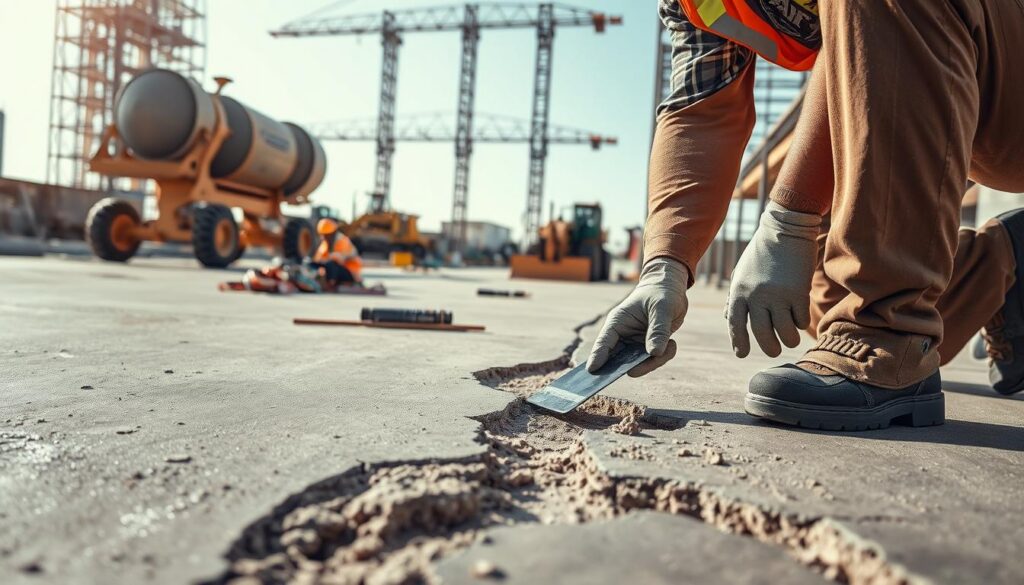
Preparing for Your Concrete Repair Project
Effective preparation is the cornerstone of any successful repair project, ensuring long-lasting results. Before diving into repairs, it’s crucial to assess the situation thoroughly. This involves identifying the root cause of damage, which may stem from moisture, movement, or even poor initial construction.
Safety is paramount during any repair process. Ensure that all team members wear appropriate safety gear, including gloves and goggles. This practice helps maintain the highest safety standards on your property.
Additionally, using professional-grade tools for cleaning and prepping the concrete is essential. Proper surface preparation is critical, as it determines whether the repair materials will adhere effectively.
Here’s a brief overview of what to expect:
- A detailed project plan will outline the necessary tools, materials, and estimated time for completion.
- Documenting the condition of your concrete before and after repairs helps in future budgeting and planning.
- Avoid common mistakes that lead to repair failures, such as ignoring drainage issues.
| Tool/Material | Purpose | Estimated Cost |
|---|---|---|
| Concrete Cleaner | Prepares the surface for repairs | $20-$50 |
| Repair Mix | Fills cracks and spalled areas | $30-$80 |
| Safety Gear | Protects workers during repairs | $15-$100 |
By following these guidelines, you ensure that your repair project is efficient and effective, safeguarding the integrity of your structures.
Steps for Effective Concrete Repair Execution
Concrete damage often occurs earlier than anticipated, sometimes within just a few years. To effectively tackle these issues, you need a structured approach. Following a strict, step-by-step process ensures that repairs are done correctly and last long.
Start by cleaning the surface thoroughly, removing all debris with a wire brush or pressure washer. As demonstrated by Mike Holmes Jr. on “Holmes Family Rescue,” assessing the extent of the damage is crucial before selecting your patching or resurfacing materials.
A Step-by-Step Repair Guide
- Always address underlying water drainage issues to prevent future failures.
- Document every step of the project to give you peace of mind about professional standards.
- Prioritize safety by wearing proper equipment and following the manufacturer’s instructions.
- Avoid the “quick fix” mentality to manage your budget effectively and prevent recurring costs.
- Monitor the movement of the concrete and the integrity of the joints to ensure your repairs can handle natural expansion and contraction.
Common Pitfalls and How to Avoid Them
Ignoring the root causes of damage can lead to significant issues down the line. Ensure that your team is well-trained in navigating the complexities of concrete maintenance. This expertise is vital to keeping your property safe and compliant with all regulations.
“Proactive management is the key to preserving your property’s value.”
Navigating Maintenance and Preventative Strategies
Concrete surfaces require consistent attention to prevent unexpected damage. Regular inspections are the backbone of a successful maintenance strategy. They allow you to catch small cracks before they turn into major safety hazards.
We assist property managers in implementing a proactive repair schedule. This schedule prioritizes high-risk areas like walkways, loading docks, and garage thresholds. Long-term care involves monitoring the movement of your slabs and ensuring that drainage systems function correctly to prevent water damage.
By keeping a detailed record of your concrete assets, you can better manage your budget. This documentation helps justify the costs of preventative maintenance to your stakeholders.
Our team provides professional guidance to understand when a repair is sufficient. Knowing when the structural integrity requires a full replacement is crucial. We work with you to develop a customized maintenance plan that addresses the specific environmental exposure and traffic patterns of your property.
We believe that consistent, small-scale repairs are far more cost-effective than waiting for a total system failure. By partnering with us, you gain a reliable contractor who understands the importance of documentation, safety, and long-term asset preservation.
Contractor Selection: Real Talk Guidance
Selecting a professional for your concrete needs is a critical step in ensuring safety and quality. A reliable contractor can help you avoid costly mistakes and ensure that your project meets the highest standards.
When looking for a contractor, consider the following:
- Choose a team that uses a diagnostic-first approach, like SlabWorx, to pinpoint the true cause of your concrete issues.
- A professional will not provide a price over the phone without assessing the movement, load, and moisture conditions affecting your concrete.
- Demand clear documentation of the repair scope to ensure that you are paying for the actual failure, not just the square footage.
- Prioritize contractors who value your property’s safety and long-term asset value over quick fixes.
If you are ready to stop guessing and start fixing, call us at (727)-625-1374 or email contact@wsvgroup.com to discuss your specific concrete repair needs. Our team is dedicated to providing the real talk guidance you need to make informed decisions about your maintenance budget and structural repair projects.
Conclusion
Timely intervention is key to preserving the structural integrity of your concrete. Maintaining your surfaces is a long-term commitment that pays off in safety, property value, and reduced liability. By focusing on diagnostic-first repairs and regular upkeep, you protect your most valuable assets from damaging weather and heavy traffic.
Remember, the quality of your repair depends on the expertise of the contractor and the precision of surface preparation. Don’t let minor cracks and spalling escalate into major structural issues that threaten safety and integrity. We are here to provide the professional support you need to keep your concrete in top condition for years to come.
If you have questions or need a professional assessment, reach out to us today. Ensure your property remains safe, functional, and attractive.