Did you know that insurers pay out over $10 billion every year for water-related losses? This staggering figure surpasses the combined costs of fire and theft. It highlights a critical issue that many property holders often overlook.
While you might regularly check fire alarms and security systems, a minor leak can pose a far greater risk to your investment. It’s easy to dismiss a small drip until it evolves into a significant issue, potentially threatening the entire structure of your property.
No building type is exempt from the threat of water-related issues. Whether you manage a retail space, an office tower, or a laboratory, the risk remains. In fact, water-related problems have become the leading cause of property loss, resulting in more insurance claims than any other single issue.
Ignoring early signs of water-related issues can lead to substantial financial losses for your business. Addressing these problems proactively is essential for safeguarding your investment.
Key Takeaways
- Insurers pay out over $10 billion annually for water-related losses.
- Minor leaks can lead to major structural issues.
- All types of buildings are at risk of water damage.
- Water damage accounts for more insurance claims than any other issue.
- Proactive measures can prevent significant financial losses.
Understanding the Hidden Threat of Water Damage
Silent leaks can be the unseen enemy of your building’s integrity. These small issues often remain hidden, yet they can lead to significant problems over time. Recognizing these subtle signs is crucial for maintaining your property.
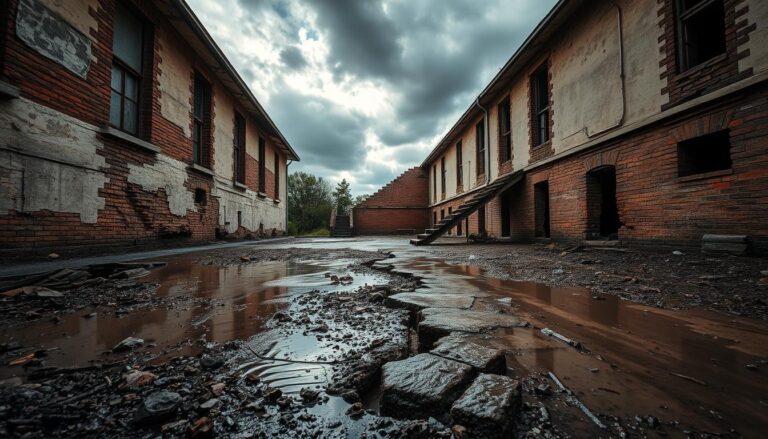
Even a tiny crack in a pipe or a misaligned window seal can allow moisture to infiltrate your building. Because these leaks are not as dramatic as a burst pipe, they can go unnoticed for weeks or even months.
Within just 24-48 hours of water exposure, mold can begin to grow, posing serious health risks. This growth can trigger respiratory issues for your occupants, making early detection vital.
Water often travels far from its source, making it difficult to pinpoint the original leak. You might find a soft spot in a wall or brown rings on ceiling tiles, unaware that the issue originates from a pipe two rooms away.
“Mold can start growing on surfaces and within building materials within just 24-48 hours of water exposure.”
- Small leaks can go unnoticed for extended periods.
- Early signs of moisture can be misleading.
- Prompt action is essential to prevent health hazards.
Teach commercial owners how water damage starts outside
Understanding the origins of water-related issues is crucial for your property’s longevity. The exterior of your building is the first barrier against the elements. If neglected, it can lead to significant problems inside.
According to The Hartford, water and freezing damage account for 15 percent of all small business property damage and liability insurance claims. Keeping your building envelope solid is essential to prevent external elements from evolving into major issues.
Regular inspections of your gutters, downspouts, and drainage systems can remove debris that may force water into your walls. Additionally, sealing cracks in your exterior and foundation is vital. Failing to do so invites cold air, increasing the risk of pipes freezing.
“A well-maintained building exterior acts as the first line of defense against the elements.”
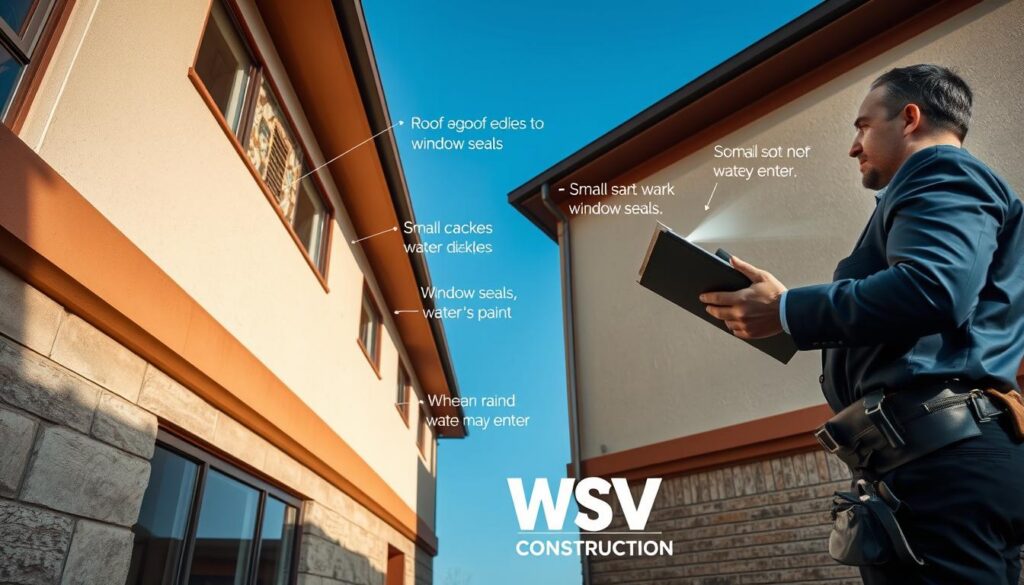
- Inspect gutters and drainage systems regularly.
- Seal exterior and foundation cracks promptly.
- Maintain a solid building envelope to prevent water intrusion.
Common Causes of Commercial Water Damage
Water-related issues can arise from various sources within your building. It’s crucial to identify these potential problems early to avoid costly repairs.
The Hartford estimates that a staggering 75 percent of losses from water issues are linked to plumbing, HVAC systems, and appliances. Over time, pipes can corrode or joints may weaken. A tiny pinhole leak can escalate into a significant rupture, flooding your entire facility.
Plumbing Failures and Pipe Leaks
Many leaks stem from aging plumbing systems. Regular inspections can help you catch these issues before they escalate.
Roof, Window, and Façade Issues
Aging or storm-damaged roofs may develop cracks or missing shingles. This allows rainwater to seep in, compromising your building’s structural integrity.
HVAC, Appliance, and Sprinkler System Mishaps
Heating, ventilation, and air conditioning systems often produce condensation. If drain pans or lines clog, that water can overflow. Additionally, a broken sprinkler head can unexpectedly dump water, causing damage to your inventory.
“Regular maintenance and inspections can prevent small leaks from becoming major issues.”
The Impact of Water Damage on Property Value and Operations
The repercussions of leaks extend beyond mere repair costs. When water issues arise, they can significantly affect your property’s value and disrupt operations. Understanding these impacts is vital for maintaining a healthy investment.
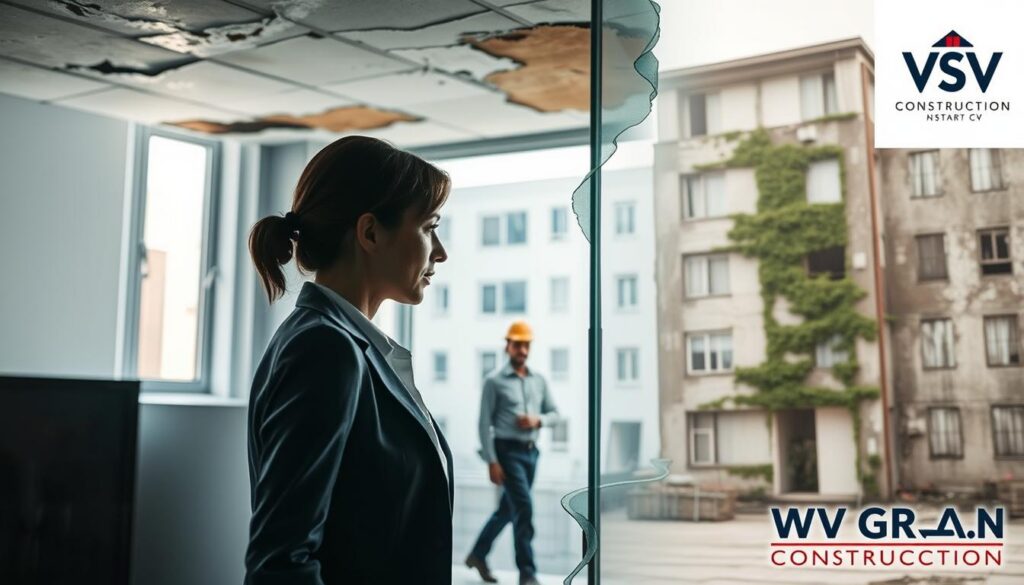
Visible signs of past water issues, like water stains on ceilings or bubbling paint on walls, send a red flag to prospective tenants and buyers. Such indications can lead to:
- Higher insurance premiums or difficulty renewing your coverage due to frequent claims.
- Loss of rental income if severe leaks force you to close parts of your building for repairs.
- Erosion of tenant trust, as persistent water issues signal inadequate maintenance.
- A cascade of costs, including repair expenses and reduced property value.
“Unaddressed water problems create a cascade of costs, including repair expenses, business interruption, lower property value, and insurance headaches.”
Preventing Damage: Commercial Waterproofing and Maintenance Tips
Preventing costly repairs begins with a solid waterproofing strategy for your building. Regular maintenance and proactive measures can save you from significant expenses down the line. Here are some essential tips to keep your property safe from moisture intrusion.
Building Envelope Inspections and Sealant Applications
Start with a thorough inspection of your building’s envelope. This includes checking for cracks and gaps that could allow moisture in. Make sure to:
- Implement a smart prevention plan that ensures your building’s envelope is watertight.
- Schedule inspections at least annually and after major storms to identify issues like cracked roofing materials.
- Hire a plumber to evaluate older piping networks, as replacing corroded pipes can prevent major leaks.
Upkeep of Critical Systems
Modern technology can enhance your leak detection efforts. Consider the following:
- Utilize sensor technology to monitor for leaks 24/7, alerting you instantly if issues arise.
- Be proactive by upgrading seals before they fail, avoiding the headaches associated with water damage.
| Maintenance Task | Frequency | Importance |
|---|---|---|
| Building Envelope Inspection | Annually | Prevents leaks |
| Plumbing System Evaluation | Every 2 years | Reduces burst risks |
| Sealant Application | As needed | Maintains integrity |
Water Main Breaks and the Importance of Swift Response
When a water main breaks, the consequences can be severe and immediate. Such events can lead to extensive flooding, affecting not only your property but also your business operations. Understanding how to respond quickly is essential to minimize damage and costs.
Here are some immediate response tactics to consider:
- The typical cost to repair a broken water service line is around $1,000, depending on the extent of digging required by the utility company.
- Water main breaks can happen without warning, often due to aging municipal infrastructure or extreme weather conditions.
- If the break is on your property’s side, you will need an emergency plumber to handle the repair immediately to prevent further flooding.
- Once the water flow is stopped, focus on removing the water and drying the affected areas using high-capacity equipment and dehumidifiers.
- Document everything with photos and notes, and notify your insurance provider as quickly as possible to start the claims process for your business.
Actionable Steps for Effective Water Damage Management
Taking proactive measures can significantly reduce the risk of costly water-related issues. Regular inspections and risk assessments are essential to catch potential problems early. A qualified insurance risk engineer can help you spot any issues and prevent water damage from happening in the first place.
Regular Inspections and Risk Assessments
Routine checks of your property can identify weak points. Keep up with maintenance on plumbing and HVAC equipment. Replace old, corroded pipes proactively to prevent bursts.
Upgrading Infrastructure and Leak Detection
Consider smart leak detection systems that alert you to leaks the moment they happen. This technology can prevent extensive damage to your property.
Emergency Response and Staff Training
Create a clear plan for what to do if a major leak or flood occurs. Ensure your staff knows how to turn off water valves and respond effectively.
- Train your on-site team or security personnel on basic response steps.
- Ensure everyone knows how to safely shut off electricity or move critical items to safety.
- Document any incidents to streamline future insurance claims.
Comprehensive Approach: Ensuring Long-Term Resilience
A comprehensive strategy is vital for ensuring your property withstands the test of time. Investing in technology and automated systems can enhance your building’s safety and efficiency. By unifying preventive maintenance, tenant communication, and vendor coordination, you create a seamless management experience.
Investing in Technology and Automated Systems
With commercial property management software like Cove, you can stay ahead of potential problems. This proactive approach allows you to identify, track, and resolve issues before they escalate into costly disasters. Every drip or stain becomes manageable, preserving your building’s value and ensuring safety.
Streamlining Property Management with Digital Tools
Combining strong physical protections, such as waterproofing, with digital infrastructure creates a more reliable building. Your long-term goal should be resilience, ensuring that whether you manage a retail center or an office tower, your property serves you for decades.
| Technology Solution | Benefit | Impact on Operations |
|---|---|---|
| Automated Leak Detection | Immediate alerts | Reduces response time |
| Preventive Maintenance Software | Streamlined management | Enhances efficiency |
| Tenant Communication Platforms | Improved transparency | Boosts tenant satisfaction |
Conclusion
A proactive approach to maintenance is key to safeguarding your investment. Water damage can be a silent killer, but you can stay ahead of it with vigilance. Regular inspections and timely repairs will help you avoid unexpected costs.
If your property is causing you trouble, don’t hesitate to reach out. Call us at (727)-625-1374 or email contact@wsvgroup.com to get the job done right. We are straight-talking contractors who know exactly how to stop leaks before they lead to big bills.
Don’t wait for a flood or burst pipe to realize your insurance coverage might be lacking. Take control of your building today by implementing the maintenance steps outlined in this article. This will ensure long-term resilience and value for your property.