Did you know that nearly half of U.S. commercial properties were built before 1980? This staggering statistic highlights the importance of addressing the needs of older structures. As these properties reach or exceed their intended service life, the challenges of maintenance become more pronounced.
Rising utility costs and new regulations place increasing pressure on building owners. Many are realizing that a wait-until-it-breaks approach is no longer viable. Instead, proactive maintenance planning is essential. Without it, older properties can lead to soaring energy bills and frequent system failures.
This article will guide you through effective strategies for maintaining older buildings. You will learn how to prioritize safety, operational continuity, and energy performance. Modernizing your property doesn’t always mean expensive replacements. Often, smaller repairs can yield significant savings.
Let’s explore how you can keep your property running smoothly while managing costs effectively.
Key Takeaways
- Proactive maintenance is crucial for older properties.
- Rising utility rates increase the need for energy efficiency.
- Smaller repairs can lead to significant cost savings.
- Prioritize safety and operational continuity in maintenance plans.
- Modernization doesn’t always require expensive replacements.
Understanding Aging Building Maintenance
Many commercial properties in the U.S. have stood the test of time, but they require special attention. As the average age of over 50 years for many structures indicates, recognizing deterioration is essential. Regular checks can help identify issues in roofs, windows, insulation, and HVAC systems before they escalate into emergencies.
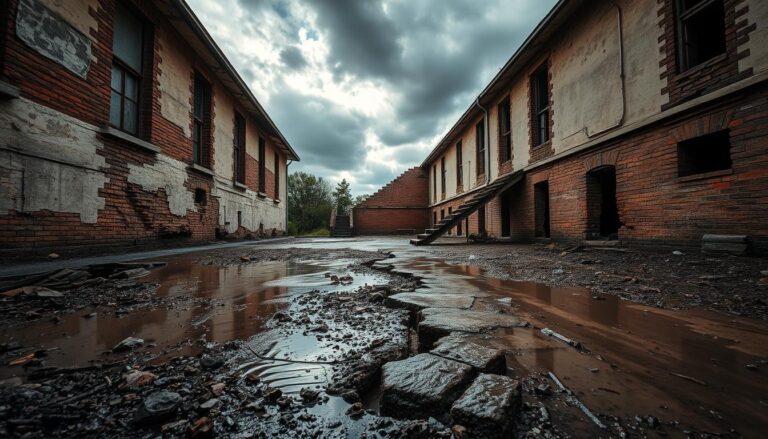
Older properties often feature outdated infrastructure, including lighting systems from the 1990s and mechanical equipment that has exceeded its service life. A building envelope with poor insulation or damaged roofing can waste conditioned air, leading to inefficiencies.
Moreover, outdated systems can negatively impact indoor air quality and occupant comfort. For educational institutions, the fact that 51% of campus buildings were constructed between 1951 and 1990 is particularly relevant. Addressing these challenges can significantly enhance the functionality and comfort of classrooms, dormitories, and laboratories.
Key Challenges in Aging Buildings
With many commercial properties dating back several decades, challenges in upkeep are on the rise. The financial implications of deferred maintenance can be staggering. For instance, educational buildings aged 25-50 years average $2.35 per square foot in work orders, compared to just $1.40 for newer structures.
Moreover, a maintenance backlog can cost around $160 per gross square foot for properties over 50 years old. This is not a trivial matter; it demands immediate attention from building owners. Neglecting these issues can lead to costly emergency repairs that far exceed the expenses of minor fixes.
Additionally, increased energy consumption is a significant concern. Older properties often face higher operational costs due to outdated systems. For example, commercial electricity use has risen dramatically, from 38% in 1979 to 61% in 2012. This increase highlights the urgent need for energy efficiency upgrades.
- Deferred maintenance leads to escalating work orders and costs.
- Backlogs of maintenance can strain limited budgets.
- Outdated systems contribute to rising energy consumption.
- Timely repairs can prevent expensive emergencies.

Help Facility Managers Manage Aging Buildings
Navigating the complexities of property maintenance requires insight into vital improvement areas. A Schneider Electric survey revealed that 93% of U.S. decision-makers view infrastructure upgrades as essential. This highlights the shift towards modernization as a business priority, not just a preference.
To optimize your approach, start by ranking upgrades based on several factors. Consider safety risks, operational impacts, energy savings, and occupant needs. This will allow you to distinguish urgent repairs from noncritical improvements, ensuring that funding is allocated effectively.
Establishing a 5-10 year action plan is also crucial. This strategy helps schedule major projects, preventing rushed decisions due to unexpected equipment failures. Engaging project managers, tax specialists, and contractors early in the process will ensure that all relevant information is considered before work begins.
Practical Inspections and Preventive Maintenance
Effective maintenance begins with thorough inspections of key systems in your property. Regular checks not only identify issues early but also help maintain energy efficiency. You can significantly reduce costs and downtime by implementing a proactive approach.
Routine inspections should cover various areas, including:
- Roofs and drains
- Electrical panels
- HVAC operations
- Plumbing and controls
- Lighting and safety equipment
Recording detailed data is crucial. Keep track of readings, work orders, failure dates, and photographs. This information creates a usable maintenance history that informs future decisions.
Investing in preventive maintenance can yield a remarkable 10x return on investment. By applying this process, you can expect a 25-35% reduction in maintenance costs, 70-75% fewer breakdowns, and 35-45% less downtime.
Maintaining clean records allows you to prioritize equipment effectively. If you cannot identify or measure your systems, it becomes challenging to allocate resources appropriately.
| Benefit | Expected Reduction | Impact on Operations |
|---|---|---|
| Maintenance Costs | 25-35% | Lower overall expenses |
| Breakdowns | 70-75% | Increased reliability |
| Downtime | 35-45% | Enhanced productivity |

Energy Efficiency and Sustainability Initiatives
Energy efficiency is more critical than ever for older properties. You can start with practical improvements that require minimal investment. Simple actions like caulking, insulation replacement, and roof repairs can make a significant difference.
Lighting retrofits deserve special attention. Many buildings can reduce electricity use by 60-70% through a well-designed retrofit. This not only cuts costs but also enhances overall energy performance.
Sealing leaks and improving the building envelope can further lower heating and cooling demands. This approach is often more cost-effective than replacing expensive mechanical systems.
According to ENERGY STAR, commercial buildings can cut energy bills by 7% over three years, averaging 2.4% annually. Additionally, the U.S. Department of Energy states that energy-focused operations and maintenance programs can save 5-20% with little capital investment.
Once these initial upgrades are in place, consider integrating renewable energy solutions like solar. Evaluate these options against your roof condition, electrical capacity, and available capital.
Capital Planning and Federal Incentives
Understanding the financial landscape for property upgrades is essential. Federal programs like 179D can significantly reduce capital spending when qualifying modernization work is already planned. This approach can offset the costs of necessary upgrades rather than justify unnecessary purchases.
For instance, a school district lost approximately $3 million in incentives after missing a crucial filing deadline. Such losses highlight the importance of being aware of key dates, such as May 15, which is vital for tax-exempt organizations seeking specific incentives or credits.
Incentive programs can change frequently due to shifts in federal policy. Therefore, it’s crucial to stay informed about current regulations. Evaluating 179D and other energy tax programs should occur only after understanding a project’s operational value, payback, and scope.
- Incentives should lower the cost of necessary upgrades, not drive unnecessary projects.
- The reported loss of $3 million emphasizes the need for proper documentation and adherence to deadlines.
- Involving tax and incentive specialists early in the process can ensure compliance and maximize benefits.
- Always verify current federal rules, as programs may be modified, phased out, or replaced.
Smart Technologies in Facility Management
In today’s world, leveraging smart technologies can revolutionize how we care for buildings. The integration of Internet of Things (IoT) sensors allows for real-time monitoring of various conditions, including temperature, humidity, and occupancy. This technology can detect leaks and abnormal operating conditions, providing valuable data to improve energy efficiency.
A Computerized Maintenance Management System (CMMS) can streamline operations by organizing work orders, asset histories, and inspection schedules into one cohesive platform. This makes it easier for building owners to track maintenance needs and respond promptly.
According to a Schneider Electric survey, 56% of respondents believe that the convergence of IT and operational technology is a significant trend. This emphasizes the importance of connecting systems while considering cybersecurity and compatibility. However, modern software cannot compensate for unreliable sensors or poor network infrastructure.
Utilizing tools like ground penetrating radar and 3D laser scanning can enhance documentation of existing conditions, ensuring better planning for repairs or upgrades. As technology advances, so too must our strategies for maintaining these essential properties.
Operational Strategies for Improved Performance
To optimize the performance of older properties, daily operations must be disciplined and well-coordinated. Implementing effective strategies can lead to significant energy savings and improved occupant satisfaction.
For instance, classrooms can be unoccupied up to 60% of the time. This indicates that operating schedules should align with actual occupancy, rather than running all areas continuously. Similarly, hotel rooms may remain unoccupied approximately 70% of the time, yet they account for 40-80% of a hotel’s energy consumption. This highlights the need for effective occupancy controls.
By focusing on measurable performance, you can identify practical changes that yield results. Here are some strategies to consider:
- Establish clear schedules and setpoints for various systems.
- Implement occupancy controls to reduce energy waste.
- Coordinate cleaning and maintenance schedules effectively.
- Regularly change filters and review shutdown procedures.
- Track service requests and daily abnormal conditions.
According to ENERGY STAR data, a 500,000-square-foot office building could achieve $120,000 in cumulative savings and over $1 million in increased asset value through small operational improvements. These examples illustrate how disciplined daily management can enhance both performance and value.
Quick Fixes vs. Major Renovations
Deciding between quick fixes and major renovations can significantly impact your budget. Understanding when to patch equipment and when to invest in replacements is crucial for long-term efficiency.
Low-disruption tasks, such as sealing leaks, replacing insulation, and upgrading fixtures, often provide immediate benefits. For instance, lighting retrofits can reduce electricity use by 60-70%, allowing for phased upgrades without disrupting operations.
On the other hand, HVAC updates may deliver energy reductions of 10-30%. However, these projects can involve extensive work, including electrical changes, piping, and ductwork modifications across multiple trades.
Before approving repairs, consider the following factors:
- Remaining equipment life
- Failure frequency
- Safety exposure
- Spare-parts availability
- Operating costs
- Potential disruption
It’s essential to recognize that repeatedly patching obsolete equipment can lead to higher costs over time. Planning for proper replacements may be the more economical choice in the long run.
| Type of Work | Energy Reduction | Disruption Level |
|---|---|---|
| Lighting Retrofits | 60-70% | Low |
| HVAC Upgrades | 10-30% | High |
| Roof Repairs | Variable | Medium |
Collaboration and Communication in Facility Management
Effective communication is the backbone of successful facility management. To ensure smooth operations, it’s essential to coordinate directly with contractors. This includes planning around access, shutdowns, permits, and safety controls. Clear documentation and completion standards help maintain focus on safety and operational efficiency.
Contractors need accurate existing-condition information before making any modifications to active building systems. This is crucial when drilling, cutting, or opening walls. Having precise data reduces risks and enhances project outcomes.
Engaging stakeholders is equally important. This includes owners, managers, occupants, IT teams, and sustainability staff. By involving all parties, you can address comfort and climate control needs effectively. Research shows that improving indoor climate can enhance student performance by an average of 15%, and up to 30% in some cases.
Utilizing advanced documentation methods, such as ground penetrating radar and 3D laser scanning, can further reduce uncertainty before construction begins. These technologies provide valuable insights, making the process smoother and more efficient.
Conclusion
Keeping older structures operational requires diligent monitoring and proactive maintenance strategies. Regular inspections and timely repairs are vital for maintaining functionality and safety. Data from reputable sources highlight that deferred maintenance can lead to increased costs, energy consumption, and reduced asset value.
Start with essential upgrades like the building envelope, lighting, and preventive maintenance before considering extensive renovations. Utilize records from your Computerized Maintenance Management System (CMMS) and IoT monitoring to make informed decisions. This approach minimizes guesswork and enhances efficiency.
Lastly, consider tax incentives as a financial benefit for worthwhile projects. Always verify eligibility and deadlines to maximize your benefits. If your home or property is causing trouble, call (727)-625-1374 or email contact@wsvgroup.com for straightforward assistance in assessing the next repair.